



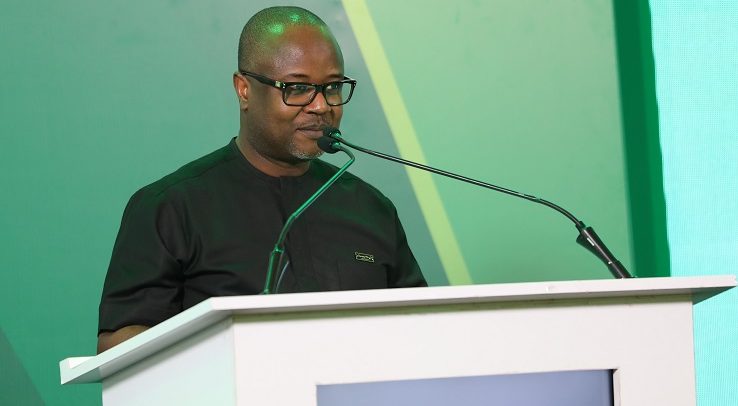
Mr. Gilbert Sebik, Regional Trade and Industry Officer, MOTI has urged stakeholders to strive to harness youth contributions toward achieving Ghana’s national development programme.
Mr. Sebik said ensuring financial protection and empowerment of children and the youth will require forging innovative partnership to achieve the desired impact.
He stressed that seeking to expand the frontiers of financial inclusion to the youth through a multi-stakeholder approach is appropriate and timely, as it will contribute to the improvement of the financial landscape of Ghana.
It is gratifying to note that many actors and stakeholders share the view and show commitment toward enhancing opportunities of providing financial services to the youth -- who form the critical mass of the population and the pivot for the expansion and diversification of Ghana’s financial sector Mr. Sebik added.
The Regional Trade and Industry Officer who disclosed this to the B&FT in an interview noted that it will also help reduce the unemployment rate when the youth acquire entrepreneurial skill with the necessary funds to achieve their aim without depending on the government for job, or migrate to the south to search for non-existing jobs -- which ends with more of them in a bad situation.
He said government needs to take steps to develop a national financial inclusion strategy of which the Ghanaian child and youth would be at the centre.
He said the strategy would also seek to broaden access, awareness and appropriate use of a range of financial services through tailored financial capability programmes.
The Regional Officer stressed that there is need to raise awareness on the range of financial products and services available to consumers to help them better understand and manage their personal finances to achieve financial security.
He said experience in most developed economies had shown that early financial education in a person’s life leads to financial independence and sound investment decisions.
He said knowledge, understanding, skills, motivation and confidence are the basic principles that enable individual’s to make financial decisions in their personal circumstances.
He lamented that Ghana’s population consists of a large proportion of children less than 15 years who need support in becoming productive in order to contribute to national development efforts.
He urged stakeholders to intensify their various advocacy actions to ensure that children and the youth are included in the proposed National Financial Inclusion Strategy.
In a related development he called for intensified farmer education by government and other stakeholders in the cotton industry on the new methods of farming to boost production.
He said the low level of literacy among farmers has made it difficult for them to adapt to modern technology to increase yields, thereby resulting to the falling standard of the textile industries in the country.
According to the Regional Officer, most of the textile industry depends on the cotton to increase the production of the local textiles which also creates some job employment for the youth and also the government generating some revenues to embark on developmental projects to reduce the unemployment rate among the youths.
Mr. Sebik noted that the gradual collapsing of the textile industries in the country is paving the way for importation of the foreign textiles, which is rather creating jobs and revenue for the foreign investors only and not the nation at large.
He stressed that climate change, threats of diseases and pests, sales and application of unapproved chemicals on cotton are some of the factors that retarded progress in the cotton sector in the country.
He said effects of climate change are being felt in most of the cocoa growing areas due to the change in rainfall patterns, which was also affecting the application of fertilisers and incidence of cotton trees.
He urged farmers to develop simple and effective labour-saving technologies to curb physical labour, and focus on intensive rather than extensive cotton cultivation practices with the application of fertiliser in a responsible manner -- adding that this will enable them to achieve their target as well as help the industry to expand and absorb more of the youth.
By Samuel SAM, Tamale








Facebook
Twitter
Pinterest
Instagram
Google+
YouTube
LinkedIn
RSS