


Some of the newly-licenced 4G Internet service providers have signalled their intention to avoid price wars with competitors who also provide data communication services to consumers as they prepare to make 4G wireless mobile networks available in the country.
The NCA last year issued the country’s first three LTE (Long Term Evolution) licences -- marketed as 4G LTE -- to three operators, BLU Telecom, Surfline and Goldlkey, for a combined fee of US$18million to enable them provide high-speed mobile broadband Internet services within the 4G range.
The Chief Operating Officer of Blu Telecom, Ekow Thompson, has told the B&FT in an interview in Accra that customers’ need for efficiency and speed will be the key to attract Internet users to the network without engaging in price wars.
“We will not be cheaper than the current market price. We want to come into the market offering competitive and much more reliable services delivered to you (consumers) conveniently.
“So below (the market rate), no -- but competitive? Yes.
“There are other value additions and incentives that we bring to the table, which you will not get anywhere else. So in terms of value you (consumers) will get more. The takeaway is that there won’t be price wars, certainly not from us,†he said.
4G is a Fourth Generation telecom standard that allows mobile broadband Internet connections at speeds up to 10 times faster than those offered by the current Third Generation (3G) mobile network, making it easier to download files, play games, surf the web or watch videos (or live-streams).
Mr. Thompson explained that the quality and value that consumers will get from accessing Internet services from the 4G provider will justify the charges they pay for the service.
“Now, a consumer streaming a three-minute video from Youtube, for instance, will take about 10 minutes to watch. For the customer, he/she has watched the video alright, but it would have cost him/her more to watch that video. What we are saying is that if, for instance, the customer watches the video from our network, s/he will be able to watch the same video in exactly three minutes.
“So what we are bringing is the convenience, comfort and efficiency that Internet users crave,†he explained.
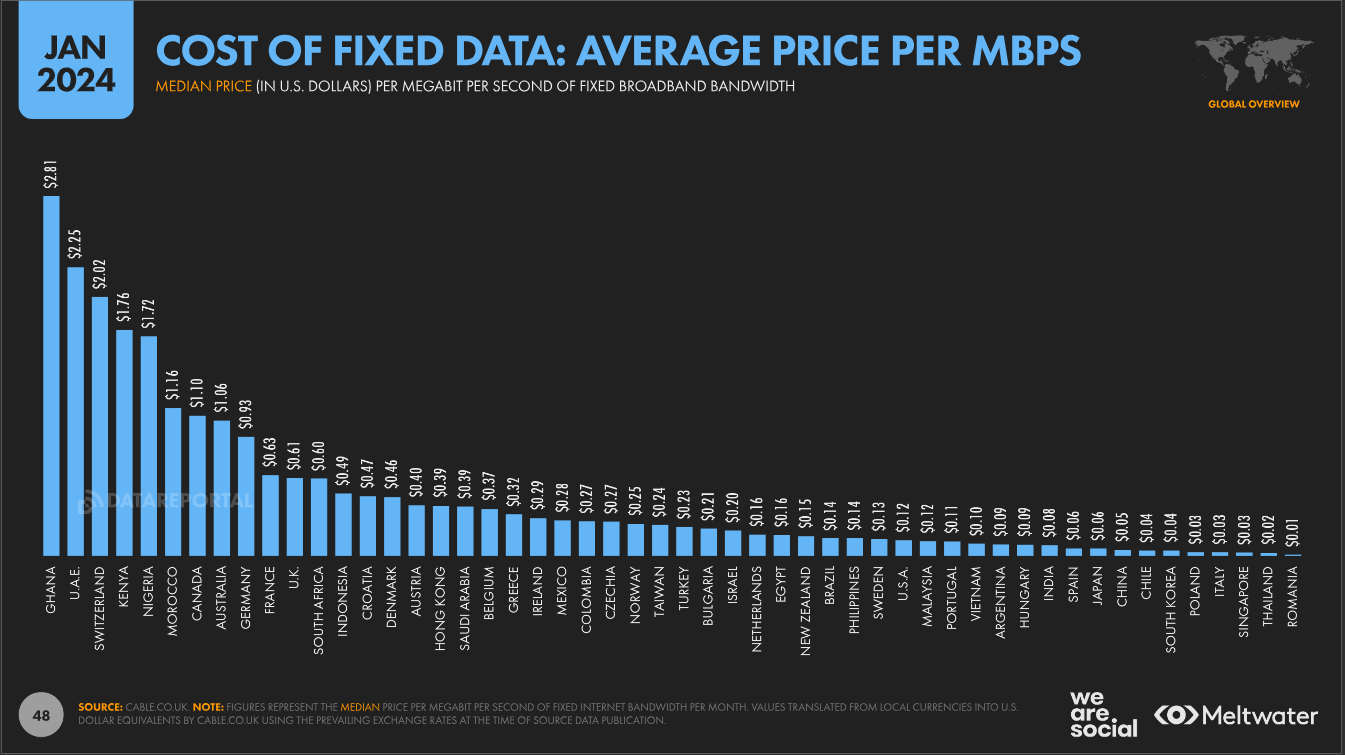
In recent times, the entry of international bandwidth providers has pushed the cost of Internet access in the country significantly downward, which has resulted in enhanced Internet-user experience and reduced latencies -- that is, how much time it takes for a packet of data to get from one point to another.
Some Internet users argue that the drop in wholesale price at which the ISPs buy international bandwidth has not reflected in the retail price for end-users.
According to the ISPs, though the retail price of Internet access has not gone down in comparison to the percentage decline in wholesale price, Internet users are now having improved experience and more value for their money.
This has resulted in an increase in Internet usage in the country as the NCA has estimated that mobile broadband penetration is nearing 40 percent from 23 percent a year ago.
Currently, there are more than 100 licenced ISPs in the country, in addition to the six mobile network operators which are all offering data services at a price that is seen by many ISPs as anti-competitive.
The prospects of 4G services are really high as the technology makes it possible for Internet users to access speed 10 times more than the current 3G speed most people are used to.
Mr. Thompson said the data market in the country is big enough to accommodate new operators set to operate on a newer technology infrastructure that will further enhance customer experience.
“We are going to operate in the data space. The NCA has put out figures that say that there is 40 percent penetration. We know that for broadband penetration, that is less. So we are bringing high-speed services and making that ubiquitous.
“So the market is big enough to accommodate all of us,†he said.
Mr. Thompson, who is pushing through BLU Telecom’s operations, said the wholly-owned indigenous firm will launch in June this year and operate mostly in Accra and Tema for the most part of 2014 before it expands its services across the country.
It is believed that Blu will put content and Video-On-Demand services at the core of its offerings with a speed of about 6 mbps (megabyte per second), which is above the current average speed of 512 kbps (kilobyte per second).
Blu Telecom is currently offering free high-speed wireless Internet services at the Accra Mall, which has become popular with patrons as about 1,000 people sign in on a daily basis.
By Evans Boah-Mensah











Facebook
Twitter
Pinterest
Instagram
Google+
YouTube
LinkedIn
RSS