


Ghana ended 2025 with good news of an end to the longstanding, destructive and economically demanding Bawku chieftaincy conflict. Since 1958, the intractable conflict has wasted lives and property which cannot be quantified.
In one of several articles I wrote about the Bawku conflict I described it as a festering sore that is destroying Ghana’s status as a peaceful and stable country in Africa.
In the latter months of 2025, President John Mahama vested his presidential or state powers in the Asantehene, Otumfuo Osei Tutu II to mediate in the Bawku conflict with the view to finding a lasting solution.
Ghanaians were not privy to the terms of reference that was to guide the Asantehene’s mediation. Nevertheless, both Mamprushis and Kusasis welcomed him as an impartial arbiter and honoured his invitations to Manhyia Palace for dialogue.
As happened with the conflict between Abudus and Andanis of Dagbon, many Ghanaians heaved a sigh of relief that at last there could be a lasting solution to a conflict that had drained national resources since 1958. Since 1958 various military and civilian governments had taken turns to support one of the factions for political expediency, which explains why the conflict defied an amicable solution all these years.
The verdict
When the Asantehene expertly and eloquently delivered his verdict via radio and television to Ghanaians, it raised more questions than answers and triggered several interpretations. Personally, I thought Otumfuo Osei Tutu took many things from the Mamprushis and handed them to the Kusasis on a silver platter.
This is why the issue of terms of reference was critical to entire process. In my opinion, it was unfair for the Asantehene to ignore requests by Mamprushis for some kind of limited role in Bawku following his recommendation that the Mamprushi Bawku Naba should vacate his seat and leave Bawku.
Perhaps, the Asantehene glossed over the historical role of the Mamprushis in the formation of Bawku. Historians have indicated that the Mamprushis ruled Bawku since 1721 till 1958, one year after independence when the first Kusasi Bawku Naba was installed by the CPP government of President Kwame Nkrumah.
That was the first politicization of the Bawku chieftaincy conflict. Successive governments interfered in the conflict by siding with one of the factions. According to historians, the Kusasis by nature were acephalous and did not have a central chieftaincy system.
Thus, each clan had a leader who administered the affairs of families within the clan. Besides, the Kusasis played a significant role as the spiritual custodians (Tendanas) of the land. On the contrary, several historical facts suggest that the Mamprushis had a well-structured hierarchical system through which they administered Bawku since 1721.
Original owners
Both Kusasis and Mamprushis claim they are the original and indigenous settlers or owners of Bawku and its surroundings. The ownership of the land is not in dispute, what is in dispute is who has the right to be Bawku Naba and to appoint sub-chiefs. With the Mamprushis having played a key role in the administration of Bawku, I think it was unfair for the Asantehene to unilaterally deny them any future role in Bawku.
It is not right to simply erase a people’s historical antecedents in a bid to find a lasting solution to a conflict of this nature. Throughout his excellent presentation of the mediation report, the Asantehene referred to the King of Mamprugu (Nayiri) as “my brother”, sadly, however, the Nayiri and his people think that the Asantehene was biased against them.
Civilised implementation
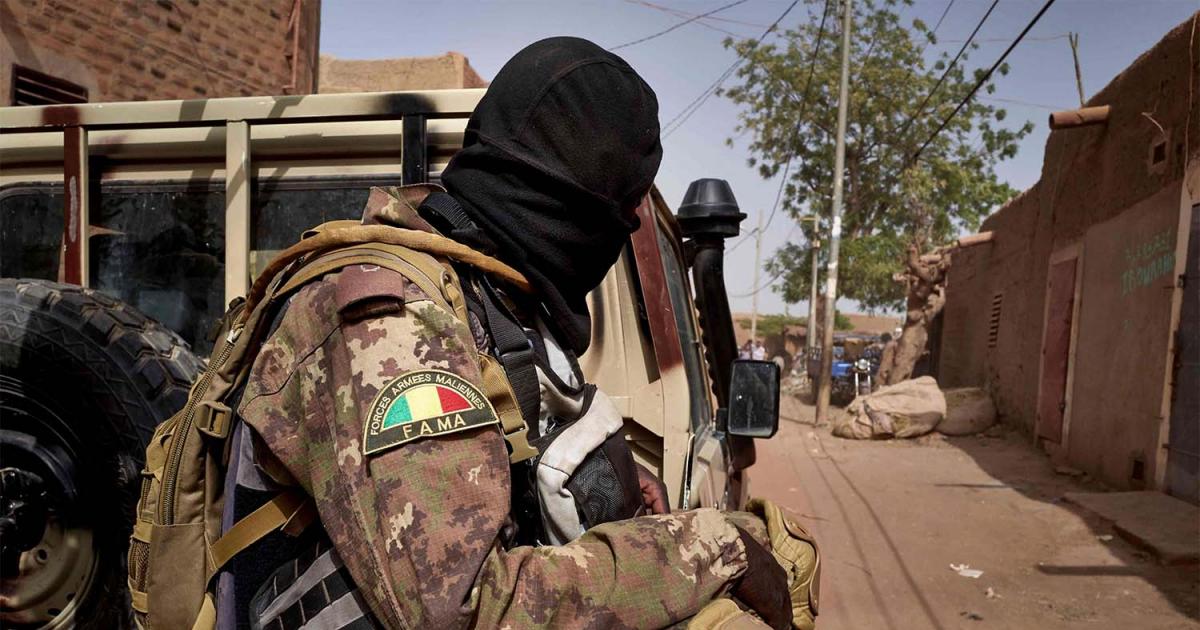
The government’s use of force to implement the recommendations perhaps, demonstrates its support for the Kusasi against the Mamprushis. The arrest and continuous detention of the Mamprushi Bawku Naba further affirm President John Mahama’s promise during election 2024 that he would kick Mamprushis out of Bawku. Clearly, the politicization of the conflict is too glaring.
I had expected a civilized, rather than a militarized implementation of the recommendations. There should have been several dialogues between the factions, a government team, the National Peace Council, the Christian Council, the Moslem Council and other international NGOs like the UNDP, UNICEF among others to map out a depoliticized and demilitarized transition. I think there should have been a transitional period during which the “wounds” of Mamprushis would be dressed and allowed to heal. Under the current circumstances it is very difficult to describe the peace in Bawku as genuine.
No peace in Bawku
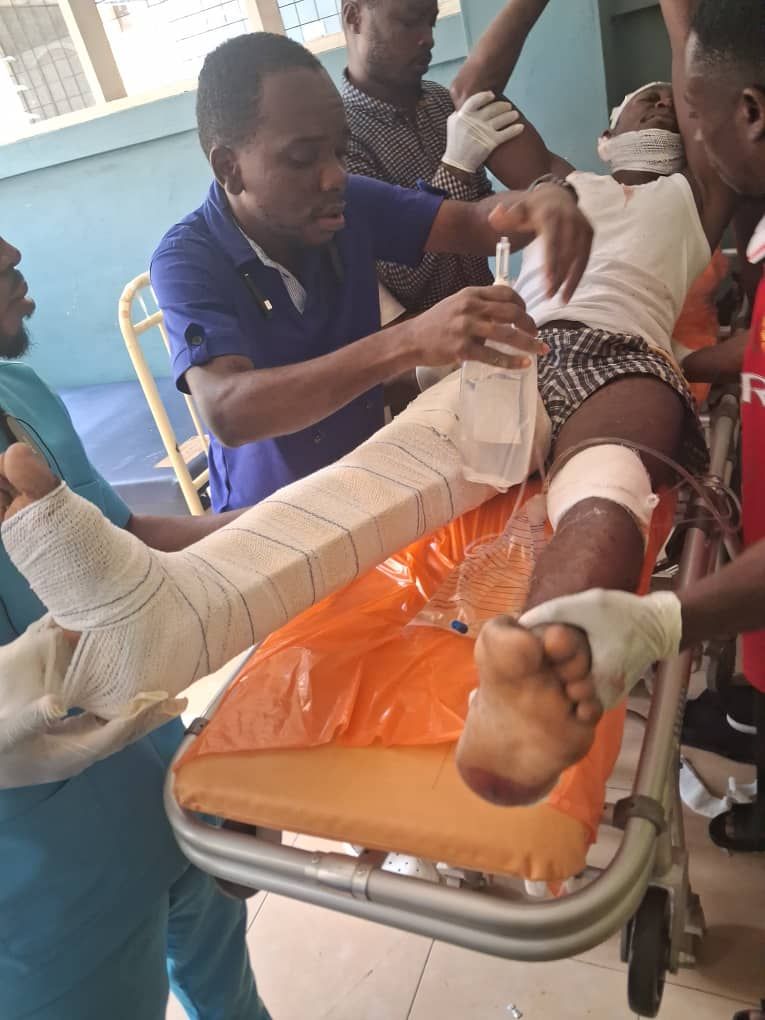
Over the past few weeks, several Mamprushi youth have taken to social media to voice their concerns over what they described state sponsored terrorism against them, using the Asantehene’s recommendations as a blueprint. On December 23, 2025, some military personnel were deplored to Natinga, a suburb of Bawku largely populated by Mamprushis to arrest Mamprushi youth who are still in custody.
This explains why some Mamprushi youth have accused the Asantehene of allowing himself to be used by President John Mahama to implement his election promise to the Kusasis. The Mamprushi youth claim that the government’s swift use of state security as an implementation strategy has dented the image of Asantehene as an impartial arbiter.
They described the whole mediation process as a conspiracy against the Mamprushis by using the Asantehene to legitimize a campaign promise. “We have been quiet for so long. You think you have power, people had more power than you”, a young lady stated in a social media post. “Where is Rawlings today, are you more powerful than Rawlings”, the young female blogger asked in apparent reference to the power brokers in NDC government.
Moreover, another Mamprushi youth explained that it is hypocritical for the government to openly support a faction in a conflict it claims to be finding a lasting solution. He argued that ideally, the government should have been an impartial arbiter. “But that is not the case with the government, which is fighting for the Kusasis”, he argued. Another young Mamprushi blogger stated, “We are happy that it is not Kusasis who were able to remove our Bawku Naba, it is the Ghana Armed Forces fighting for them.” In the view of Mamprushis the current artificial peace will only last as long as the NDC is power.
It is worth noting that the Kusasis and Mamprushis are people with a common heritage and several cultural traits that bind them. It is sad that they have been fighting each other for control of a land they jointly lived on for centuries.
Therefore, a unilateral declaration that one faction should abdicate the throne within such short notice is not as easy drinking water or eating food. For this reason, the government needs to stop its militarized implementation and constitute a broader stakeholder forum to map out an inclusive and lasting solution. Perhaps, the government should explore a two-chieftaincy or a rotational chieftaincy solution.
Military escort
For the first time in a few years, the Member of Parliament for Bawku Central, Mr. Mahama Ayariga recently visited Bawku under heavy military protection. His visit occurred after the Mamprushi chief was arrested and detained. Mr. Ayariga, who is also the Majority Leader of Parliament, has been severally accused of fomenting the conflict, perhaps for political gain. But how long will Mr. Ayariga and other MPs in the Bawku area continue to hide under military escort?
This suggests that the so-called peace is artificial and that there are several things wrong with the peace process. For some years now, the political gains of many politicians depended on the conflict in Bawku. Such politicians continue to exploit the vulnerabilities of the people for political and financial gain. The tug of war is happening at the expense of the women and children, whose future looks bleak.
Challenging recommendations
The Mamprushis are in court to challenge the Asantehene’s recommendations, in what appears to be a very difficult case given the status of the Asantehene in Ghana. They are praying the High Court to overturn the Asantehene’s recommendations that the Mamprushi Bawku Naba should abdicate his role. Although his words have no legal locus, they often carry weight in Ghana and across the world. Whatever, the outcome of the court case the Nayiri and his people will never forgive the Asantehene, who they accuse of being used by President John Mahama to fulfill his campaign promise to Kusasis.
Many people, including yours truly argue that in view of the highly politicized nature of the Bawku conflict the revered Asantehene should have rejected the mediation role assigned him by President John Mahama, who had already taken a stance in favour of Kusasis. In the heat of the election 2024, then candidate John Mahama stood on a campaign platform in Bawku and promised Kusasis that he would hand Bawku to them if they voted for him. That statement further incensed the factions and heightened tension in the area.
Little wonder that shortly after he won massively and was sworn into office the Kusasi youth started agitating for him to deliver his promise. In this regard, the Mamprushis could be right in concluding that the Asantehene was used to deliver an election promise. With hindsight, the Asantehene should avoid meddling in such highly politicized conflicts to preserve the dignity of the Golden Stool and his strong brand as the occupant of the Stool.
The post Development Discourse with Amos Safo: Bawku: Genuine peace or artificial peace? appeared first on The Business & Financial Times.
Read Full Story







-1200x1107.webp)




Facebook
Twitter
Pinterest
Instagram
Google+
YouTube
LinkedIn
RSS