


Every year, Ghana honours its farmers with speeches, parades, and awards. But beneath the ceremony lies an uncomfortable truth: we are celebrating agriculture while destroying the very foundations that make agriculture possible.
This year, National Farmers’ Day should feel less like a celebration and more like a national alarm.
A nation killing its own agricultural future
Galamsey has devastated Ghana’s environment at a scale that threatens our very survival:
About 65% of our rivers are polluted, silted, or dying.
Toxic mercury and cyanide have infiltrated water bodies and farmlands.
Food crops grown in galamsey zones now show dangerous heavy metal contamination, raising silent but deadly public health concerns.
How do we celebrate farmers when the land they cultivate and the water they depend on are being poisoned beyond recognition?
We cannot pretend agriculture is flourishing when the pillars that sustain it – water, soil, and forests – are collapsing.
Leadership that refuses to act
The political class has the mandate and power to end galamsey decisively. Yet year after year, we see:
- inconsistent enforcement
- selective arrests
- political interference
- quiet protection of illegal operators
The question is no longer whether government can stop galamsey – it is whether government wants to. And the evidence, sadly, suggests otherwise.
Ghana’s environmental collapse is not a lack-of-technology problem; it is a lack-of-leadership problem.
The silence of institutions that should lead the fight
There have been flashes of courage – but they faded too soon.
The Greater Accra Catholic Church’s bold attempt
Last year, the Catholic Church in Greater Accra attempted a historic anti-galamsey march. It was one of the few moral voices bold enough to challenge the political machinery destroying our rivers. But like many prophetic warnings in history, it was met with lukewarm national response and quickly drowned out by political noise.
Their courage was admirable – but courage without collective action becomes a lonely echo.
Where are our Trade Unions?
Institutions with real leverage – Ghana Medical Association (GMA), GNAT, TUC, and other unions—have refused to apply the pressure needed to force government action:
Doctors treat mercury-poisoned patients but will not strike for the rivers that poison them.
Teachers teach children who may grow up in a land without clean water, yet remain silent.
Workers’ unions negotiate salaries while the environment that feeds the economy is dying.
If galamsey does not provoke national resistance, what will?
When the groups with the greatest moral and social influence choose silence, the nation’s decline accelerates.
A silent citizenry that enables destruction
The devastation is visible. We see:
- brown rivers where blue streams once flowed
- excavators tearing through forests
- contaminated food entering our markets
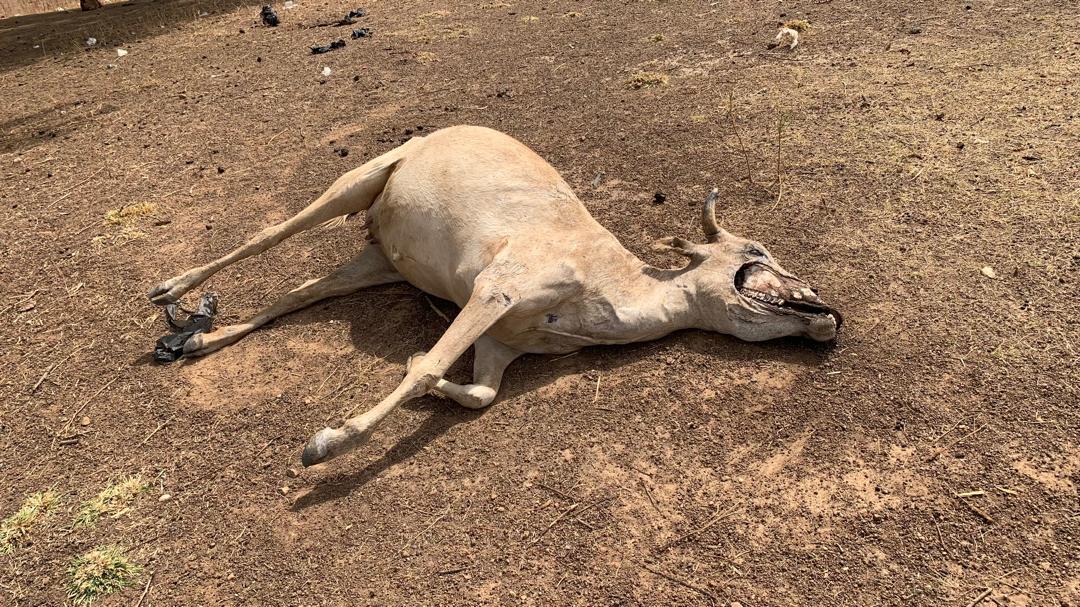
- videos circulating of dead fish and poisoned fields
Yet we scroll past, shrug, and move on.
A nation does not collapse because of the wickedness of a few, but because of the silence of the many.
Leaders fail because citizens fail to force them to succeed.
A country destroying the environment that sustains it
Together – leaders who refuse to act and citizens who refuse to demand action – we have become a collective force tearing down the environment that sustains our very existence.
The tragedy is that this destruction is not abstract. It is already affecting:
- food security
- public health
- agricultural productivity
- economic stability
- intergenerational survival
When contaminated cassava, cocoyam, plantain, vegetables and fish enter the market from galamsey zones, the damage becomes personal. We are not poisoning “the environment.” We are poisoning ourselves.
Sad to say but it is becoming increasingly evident that we are like 35million viruses, living within a cell called Ghana destroying the country from within. The essential organelles of this cell represented by our rivers, forests and land are being destroyed leaving a breached cell-wall. The saddest part is that viruses usually destroy their host unintentionally. But in Ghana’s case, we see the destruction happening in real time – yet we continue. Leadership looks away; citizens look away. We are watching the cell die from within and pretending everything is fine.
What Farmers’ Day should really be
Instead of a feel-good national ritual, Farmers’ Day should become:
- a day of environmental accountability,
- a national emergency reflection
- a call to action for unions, churches, professionals, and citizens,
- a renewed commitment to protect water bodies and restore degraded lands.
If we truly celebrate farmers, we must fight for the land and water that make farming possible.
Final reflection
A nation that destroys its rivers destroys its food security.
A nation that contaminates its soil contaminates its future.
A nation that watches environmental collapse in silence signs its own death warrant.
The real celebration – the one worth having – will come only when Ghana rises with one voice to save its rivers, its forests, its land, its farmers, and its future.
Until then, National Farmers’ Day remains painfully ironic – a celebration built on poisoned soil and toxic rivers devoid of all lifeforms.
By Efo Small
The post National Farmers’ Day: A celebration built on poisoned soil and toxic rivers appeared first on Ghana Business News.
Read Full Story






Facebook
Twitter
Pinterest
Instagram
Google+
YouTube
LinkedIn
RSS