


By Iddi Yire/Doris Amenyo, GNA
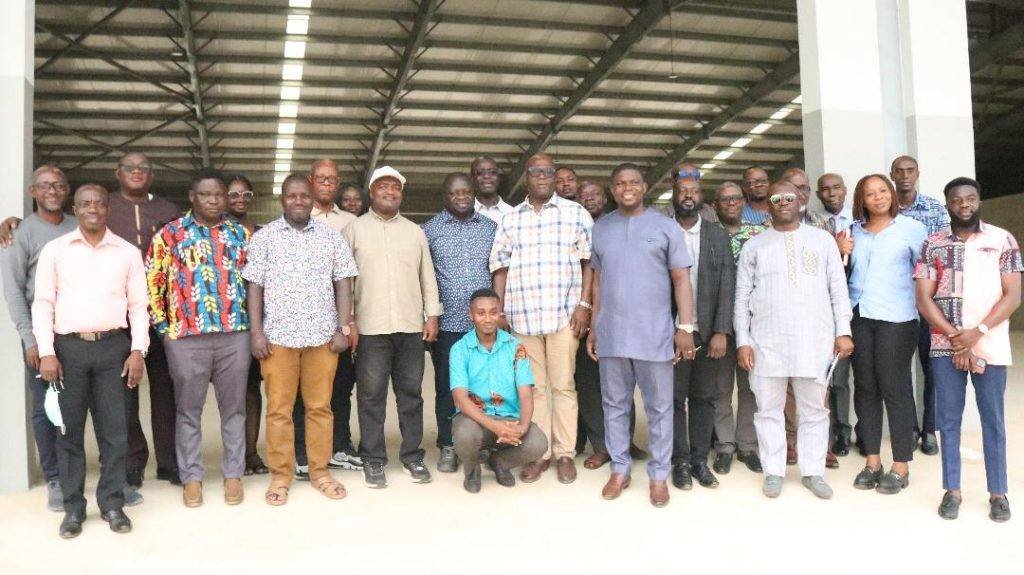
Accra, Oct 25, GNA – Deutsche Gesellschaft für Internationale Zusammenarbeit (GIZ) has hailed Caritas Ghana’s plan to start a social electronic-waste (e-waste) recycling business in the country.
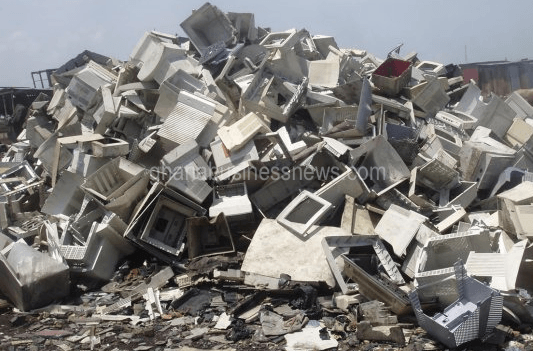
E-waste describes discarded electrical or electronic devices; its informal processing in developing countries can lead to adverse human health effects and environmental pollution.
Mr Markus Spitzbart, GIZ, Head of Programme, Sustainable Management and Disposal of E-Waste in Ghana, said the GIZ was pleased to provide technical assistance for the project.
“From our point of view the approach of Caritas Ghana shows practical solutions for several challenges when talking about sustainable e-waste recycling in Ghana,” Mr Spitzbart stated at the launch of the Caritas Ghana E-Waste Management Project in Accra.
“The social recycling business of Caritas Ghana will provide an ideal institutional and company framework, where the eco-levies charged to the manufacturers and importers as part of the future electronic product recycling-system, can be used to ensure environmentally sound e-waste recycling through the recycling fund,” he said.
“Therefore it is crucial that the Ghanaian government establishes the legal framework to ensure the proper working of the recycling fund as soon as possible,” he added.
Caritas Ghana, which is the development and relief wing of the Ghana Catholic Bishops’ Conference, is committed to lead the Church’s effort in Ghana to address the looming health and environmental calamity of e-waste.
The project involves undertaking advocacy for adequate policy response, undertaking nation-wide public education and sensitisation for behavioural and attitudinal change about disposal of e-waste, and the setting up of actual collection centres of e-waste for proper recycling.
The project partners include GIZ, AAA Infrastructure and Strategic Power Solutions (SPS).
Mr Spitzbart said the management of the e-waste sector in Ghana was of a great importance to the Government of Ghana and other stakeholders as well.
He said currently, resource recovery from e-waste in Ghana was almost exclusively informally organised.
He noted that it provides a livelihood for many, but also had severe negative consequences.
“Materials that are of no use to the informal scrap workers are burnt or dumped into the environment and lead to dramatic environmental and health burdens,” he said.
“Due to not existing or insufficient occupational safety measures informal scrap workers are exposed to serious health risks such as ground and surface water being contaminated with heavy metals,” he said.
Mr Spitzbart said additionally, the burning of cables releases toxic gases that frequently cause respiratory diseases and aggressive greenhouse gases were emitted for example from fridges into the air, contributing to climate change.
He said the government of Ghana had recognised the challenge and had developed the “Hazardous and Electronic Waste Control and Management Act” (Act 917), which came into force 2016.
He said depending on the type of equipment recycling of e-waste could be a profitable business without additional funding or a waste management activity that has to receive additional financing to be able to achieve financial sustainability.
“Using their huge network of institutions to collect end-of-life electric and electronic appliances and to destine them to environmentally sound recycling and disposal can be an efficient way in directly linking efficient e-waste collection with formal state-of-the-art recycling processes,” he said.
He said involving disadvantaged persons in the collection and treatment of e-waste the social recycling business of Caritas Ghana generates additional social benefit.
Mr Samuel Zan Akologo, Executive Secretary, Caritas Ghana, said the burning of e-waste was harming people’s health and devastating the environment.
“It is now known that Agbogbloshie here in Accra is among the most concentrated e-waste sites in the world. Ghanaians including some of us here, are still disposing their end-of-cycle mobile phone batteries by ordinary and common ways,” he stated.
He appealed for proper disposal of e-waste through recycling to avoid any damage to human health and the environment.
Mr Kenneth Ashigbey, the out-going Managing Director, Graphic Communications Group Limited, called on all and sundry to deal with the challenges of consumerism, irresponsible development, environmental degradation and global warming.
Read Full Story





Facebook
Twitter
Pinterest
Instagram
Google+
YouTube
LinkedIn
RSS