


Healthcare is not merely a social service but a critical component of national economic infrastructure that underpins productivity, growth and human capital development, the Board Chairman of the Ghana Investment Promotion Centre (GIPC), Dr. Akwasi Opong-Fosu, has stated.
He made the assertion when he delivered remarks as a Special Guest at the 2nd World Bridges Conference on Industry, Trade, and Health held in Istanbul, Turkey, where global policymakers, investors and health sector leaders converged to discuss the evolving linkages between healthcare, trade and investment.
He emphasised that countries which deliberately invest in healthcare systems through innovative financing models and Public-Private Partnerships (PPPs) are better positioned to achieve sustainable economic development and competitiveness.
Dr. Opong-Fosu noted further that a healthy population remains the foundation of national competitiveness, stressing that countries that deliberately invest in strong, resilient healthcare systems are better positioned to achieve sustainable development.
“Healthcare underpins economic growth. It is the backbone of productivity, innovation, and national resilience,” he stated.
Global best practices
Touching on global trends, Dr. Opong-Fosu highlighted how innovative healthcare financing and Public-Private Partnerships (PPPs) have transformed health systems in many countries, enabling them to expand access, improve quality and attract private capital.
He commended Türkiye’s city hospitals initiative and health tourism model, describing it as a successful blend of public policy, private sector efficiency and long-term financing that has positioned Turkey as a leading global medical destination.
According to him, Turkey’s experience demonstrates how healthcare infrastructure, when properly financed and managed, can become both a social good and an economic asset.
Dr. Opong-Fosu also cited India’s targeted PPPs in specialised healthcare delivery, Canada’s availability-based healthcare financing models and Rwanda’s policy-driven health financing reforms as examples from which emerging economies can draw valuable lessons.
“These countries show that with the right policy environment and financing structures, healthcare systems can deliver efficiency, sustainability and improved outcomes,” he said.
Ghana’s context
Focusing on Ghana, the GIPC Board Chairman described the National Health Insurance Scheme (NHIS) as a sturdy foundation that has significantly improved access and equity in healthcare delivery over the years. However, he stressed that the growing demand for specialised and advanced care requires innovative approaches to financing, infrastructure development, and service delivery.
“While NHIS has provided an important access framework, the future of healthcare financing must include innovative partnerships, particularly to support specialised services, technology adoption and advanced infrastructure,” he observed.
Dr. Opong-Fosu noted that Ghana’s strategic location, political stability and growing health sector make it well-positioned to attract investment into healthcare and related industries.
Ghana–Turkey collaboration
He further called for deeper collaboration between Ghana and Turkey, particularly in hospital development, medical technology, pharmaceuticals, health infrastructure, and health tourism.
According to him, such partnerships would support Ghana’s ambition to position itself as a healthcare hub for the West African sub-region, while also creating opportunities for skills transfer, investment, and regional service delivery. “Strategic Ghana–Turkey collaboration can unlock mutual benefits, strengthen healthcare systems and position Ghana as a regional centre for quality healthcare services,” he said.
Health, trade and investment
The World Bridges Conference focused on the intersection of health, trade, and investment, highlighting the increasing role of healthcare as an economic sector rather than a purely social intervention.
Dr. Opong-Fosu commended the organisers for creating a platform that encourages dialogue between governments, investors, and industry players on sustainable healthcare development. He expressed appreciation for the opportunity to engage in discussions that recognise healthcare as a driver of national development and international competitiveness.
The conference continues to serve as a global forum for building partnerships that bridge public policy, private investment, and innovation in critical sectors, including healthcare, industry, and trade.
The post Healthcare is economic infrastructure – Dr. Opong-Fosu at global conference in turkey appeared first on The Business & Financial Times.
Read Full Story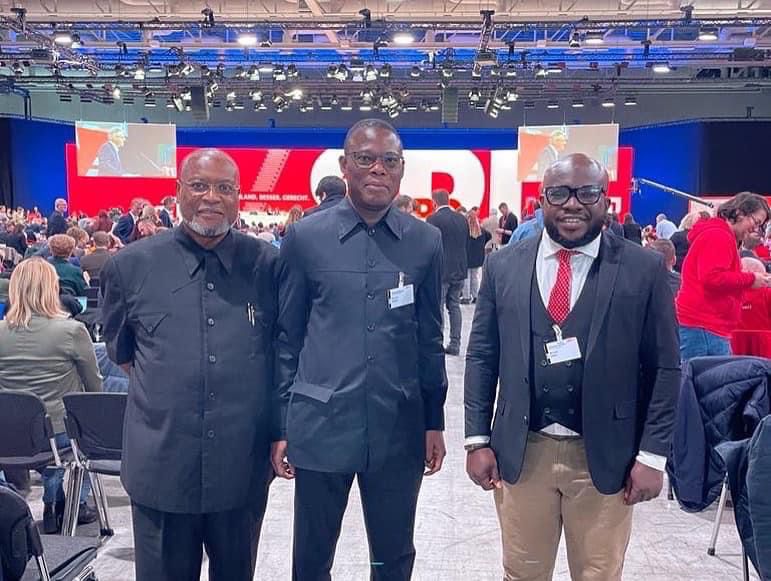





Facebook
Twitter
Pinterest
Instagram
Google+
YouTube
LinkedIn
RSS