


By Dr Andrews AYIKU
Introduction
As a business coach with over 20 years of experience working with Ghanaian entrepreneurs, I’ve seen businesses withstand currency changes, power outages, and worldwide pandemics. The most persistent “silent killer” of Ghanaian Small and Medium Enterprises (SME) has always been the cost of funding.
In January 2026, we find ourselves in a unique economic situation. While the headline data show that the economy is stabilizing, the Monetary Policy Rate (MPR), the fundamental driver of growth, remains locked at 18%. To any experienced observer of the private sector, this is no longer a protective measure; it is a bottleneck.
The Monetary Policy Rate is the lifeblood of our financial system. It is the base rate at which the Bank of Ghana (BOG) loans to commercial banks, determining the interest rates paid to the woman running a cold store in Makola or the tech startup in East Legon. With inflation closing the year at a laudable 5.4%, the gap between the cost of money and price increases has grown into a gulf. It is time for the BOG to connect its monetary policy with real-world conditions.
Reducing the Cost of Capital for Expansion
Access to inexpensive loans is critical for business expansion. Consider a small agribusiness in the Volta Region that wants to buy a new processing unit to add value to its cassava harvest. At a commercial bank’s 30% interest rate, the “payback period” for that machinery becomes so long that the investment no longer makes sense.
The project is shelved, no equipment is purchased, and the value-added chain remains broken. The BOG’s relaxation of monetary conditions would lower the entrance barrier for capital-intensive ventures, transforming dormant company plans into active construction sites and working factories.
Aligning with the New Inflationary Reality
The large difference between current inflation and the policy rate provides the most immediate justification for a rate drop. Inflation completed the year at 5.4%, but the policy rate continues at 18%. This results in a “real” interest rate that is probably among the highest in the world.
For a business owner, this means that borrowing costs are roughly treble the pace of price rises. The BOG’s decision to decrease the MPR to reflect the economy’s cooling is both cautious and scientific. Maintaining an 18% interest rate versus 5.4% inflation implies a lack of confidence in current stability, which might contribute to market concern rather than calm.
Increasing National Productivity and Innovation
High borrowing rates force enterprises to operate in a “survival mode” rather than “innovation mode.” When capital is expensive, businesses prioritise high-margin, short-term trades above long-term research or process improvements. To compete in the African Continental Free Trade Area (AfCFTA), Ghanaian SMEs must be both productive and efficient. Productivity necessitates investment in technology and improved systems. If the BOG lowers the interest rate, it signals to the market that it is safe to invest for the future. This change from “trading” to “producing” is critical for a more resilient, self-sufficient economy.
Reducing the Burden of Non-Performing Loans (NPLs)
One unexpected consequence of holding the MPR at 18% for an extended period is the degradation of bank balance sheets. When interest rates are too high, the risk of default rises. Many small and medium-sized businesses are currently struggling to service loans obtained during periods of high inflation.
By lowering the rate immediately, the BOG provides a “breather” for these companies. Lower interest rates lead to restructured, more manageable debt, which reduces the number of non-performing loans in the banking sector. A robust private sector is inextricably linked to a healthy banking sector; the two cannot exist apart.
Strengthening Overall Economic Recovery
Ghana’s economy is in a delicate state of recovery. The aims for 2026 are centred on growth and stability. However, growth is not a passive process; it must be stimulated. A drop in the policy rate serves as a psychological and financial “green light” to investors. It appears that the central bank’s focus is shifting from “crisis management” to “growth facilitation.” This stimulus is required to ensure that the recovery is more than simply a statistical phenomenon in a government report, but a palpable reality felt in the pockets of market women, youngsters, and industrialists.
Conclusion
The data is clear, and the route ahead is obvious. With inflation at 5.4%, the 18% Monetary Policy Rate has served its function and should be phased out in favour of a rate that represents our current stability. As we prepare for the impending policy decision, the Bank of Ghana has a historic chance to ignite the private sector. By lowering the cost of lending, the BOG will not only help the government’s job creation goals but will also enable millions of SMEs to transition from survival to relevance. The entrepreneurs I coach are prepared to create, hire, and lead Ghana into a thriving 2026.
Author
Dr Andrews Ayiku
Senior Lecturer/SME Industry Coach
Coordinator (MBA Impact Entrepreneurship and Innovation)
University of Professional Studies Accra
IG: andy_ayiku
@AndrewsAyiku
F: Andyayiku
The post Why the Bank of Ghana needs to lower the 18% policy rate appeared first on The Business & Financial Times.
Read Full Story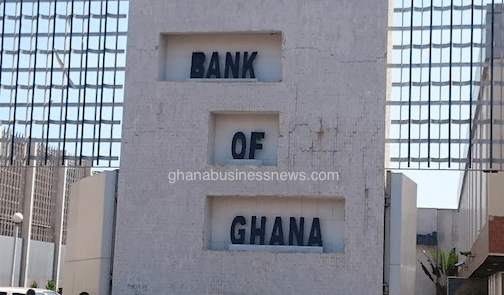







Facebook
Twitter
Pinterest
Instagram
Google+
YouTube
LinkedIn
RSS