


By Christabel Danso ABEAM ([email protected])
Following a visit to the Kpong Irrigation Scheme at Asutsuare in the Greater Accra Region, the Minister for Finance, Dr. Cassiel Ato Forson, has disclosed that government will roll out a World Bank-supported Agriculture Compact aimed at transforming the country’s agricultural sector under the West Africa Food Security Resilience Programme (FSRP).
He explained that the Compact, developed under the Agri-Connect initiative and yet to be submitted to Parliament for approval, will target key economic and staple crops to address food surpluses, stabilise markets, boost productivity, create jobs and promote long-term food self-sufficiency.
“Under the programme, government is targeting 100,000 hectares of oil palm plantations, the rehabilitation of cocoa farms, and major investments in rice, maize, soya and poultry production,” the minister stated.
Dr. Forson further revealed that Ghana has the capacity to cultivate more than 400,000 hectares of rice—far exceeding the estimated 100,000 hectares required for national self-sufficiency. He added that expanded production of rice, maize and soya would underpin a stronger domestic poultry industry and significantly reduce dependence on imports.
Beyond food security, he noted that the Agriculture Compact positions the sector as a key driver of economic growth.
Referencing global shocks such as the Russia-Ukraine conflict, the Minister observed that these developments have exposed Africa’s vulnerability to external food supply disruptions, despite the continent’s vast arable land, water resources and favourable climatic conditions.
Farmers’ concerns
Addressing farmers’ concerns over market access amid recurring food gluts, Dr. Forson reiterated government’s commitment to resolving the challenge.
“The President has directed that the School Feeding Programme source only locally produced food. Other government agencies will also be required to prioritise the purchase of made-in-Ghana agricultural produce,” he assured.
He further indicated that the National Buffer Stock Company (NAFCO) has been financially strengthened, with budgetary allocations expected to be released to support large-scale purchases from farmers. Government, he added, also plans to construct modern silos to improve storage capacity.
These interventions, he stressed, would guarantee markets for farmers, reduce post-harvest losses and encourage increased production.
World Bank support
Speaking after the visit, the World Bank’s Division Director for Ghana, Robert Taliercio, reaffirmed the Bank’s support for Ghana’s agricultural transformation agenda, emphasising the sector’s critical role in the economy.
“Agriculture contributes about 20 per cent to Ghana’s Gross Domestic Product (GDP) and provides employment for more than one-third of the population, making it vital for inclusive growth,” he said.
However, Mr. Taliercio pointed to infrastructure deficits—including inadequate irrigation systems, poor farm-to-market roads and weak rural transport networks—as major constraints holding back the sector.
He disclosed that the World Bank is mobilising up to US$1 billion in support as swiftly as possible, noting that the current challenges require urgent intervention.
Mr. Taliercio also called for policy reforms to improve the investment climate and encourage greater private sector participation to mobilise capital and enhance productivity.
The post World Bank-backed agriculture compact to tackle food glut, avert food insecurity appeared first on The Business & Financial Times.
Read Full Story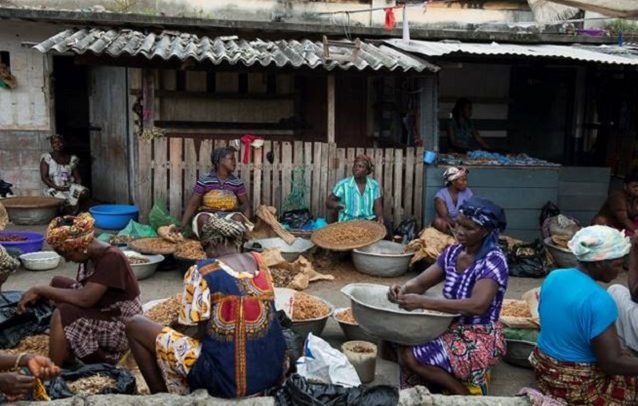






Facebook
Twitter
Pinterest
Instagram
Google+
YouTube
LinkedIn
RSS