


By Elizabeth PUNSU, Kumasi
Severe power fluctuations and growing environmental challenges are crippling water production in the Ashanti Region, with the Ghana Water Limited (GWL) recording significant shortfalls in supply to Kumasi and surrounding areas.
Managing Director of GWL, Mutawakilu Adam, disclosed that unstable electricity supply and the shallow nature of the Barekese Dam caused the company to miss its production target by about 959,000 cubic metres last month—denying thousands of residents access to water.
Speaking to journalists after inspecting the Barekese and Owabi dams during a facility visit by top management of GWL, he said resolving the power challenge and undertaking urgent dredging works are critical to restoring supply.
“We couldn’t meet our target. We fell short by almost 959 thousand cubic metres of water, and that is huge. It denied some people the opportunity to get water. It is critical that we resolve the power challenge and get the dredging done,” he said.
According to him, discussions with the Electricity Company of Ghana (ECG) are underway to stabilise power supply, including the provision of a dedicated transformer and upgrading GWL’s system to 11kV.
He told journalists that the impact of the erratic power supply has been severe. Plants designed to operate on a 24-hour cycle are currently running for only 14 hours, leading to a 30 percent drop in output. In some cases, outages have reduced operational capacity by as much as 84 percent.
The Barekese Treatment Plant—one of the main sources of water for Kumasi—has been among the hardest hit. With a storage capacity of 36 million cubic metres and expected daily output exceeding 30 million gallons, the plant now struggles to meet demand due to frequent disruptions.
Furthermore, Chief Manager for Ashanti Production at GWL, Dr. Hanson Mensah-Akutteh, said the power situation is placing enormous strain on supply systems.
“The situation is seriously impacting our production volumes. This is not enough to supply our customers because demand is high,” he said.
Beyond power challenges, the Managing Director warned that the increasing shallowness of the Barekese Dam poses a long-term threat to water security in Kumasi, which relies on the facility for over 70 percent of its supply.
He explained that water extraction from deeper sections of the dam has become impossible due to sanitation concerns, leaving only the upper levels usable—an indication of dangerously low depth.
“The danger is that with climate change and prolonged drought, the dam could dry up if we do not act. It is our responsibility to dredge it to restore depth,” he said.
Mr. Adam noted that provisions for dredging were captured in the latest major tariff review approved by the Public Utilities Regulatory Commission (PURC), and a request for financial clearance has been submitted to the Ministry of Finance.
“It is my hope that approval will be granted on time so we can begin dredging before the rains set in,” he added.
Plastic engulf Owabi Dam
At the Owabi Dam, Mutawakilu Adam also raised concerns about pollution and siltation, which are further constraining production.
He indicated that large volumes of plastic waste are frequently washed into the intake during rains, requiring manual removal by staff using canoes.
The post Power instability, siltation hit Kumasi water supply appeared first on The Business & Financial Times.
Read Full Story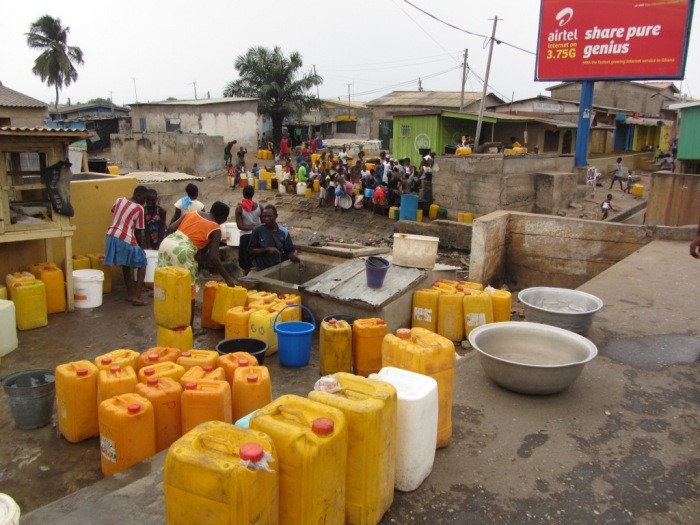



Facebook
Twitter
Pinterest
Instagram
Google+
YouTube
LinkedIn
RSS