


By Steven E. HENDRIX
Ghana today stands at a moment of profound consequence for its constitutional identity.
On the international stage, the country has taken a principled and commendable position, leading efforts at the United Nations to recognize the transatlantic slave trade as one of the gravest crimes in human history. That effort reflects Ghana at its best—grounded in dignity, justice, and moral clarity.
At home, however, Ghana is once again considering legislation that moves in the opposite direction.
Parliament approved this bill in 2024, but it never became law. It has now been reintroduced and is again under consideration. Ghana is once again considering legislation that moves in a troubling direction.
The proposed “Human Sexual Rights and Family Values Bill” is not merely controversial. It is undignified. It is discriminatory. And it sits uneasily—if not irreconcilably—with the Constitution of Ghana.
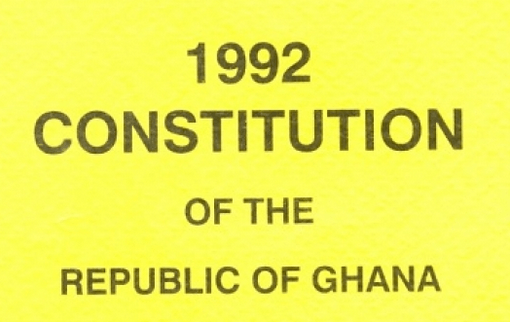
Ghana’s Constitution is not ambiguous on these questions. It affirms that fundamental human rights are inherent. It guarantees dignity. It prohibits discrimination. These are not foreign impositions. They are Ghanaian law, adopted by Ghanaians, and binding on all branches of government.
Constitutions are not designed to protect the majority. Majorities rarely need protection. Constitutions exist to ensure that even those who are unpopular, misunderstood, or marginalized retain their dignity and their rights under the law.
That is the test now before Ghana.
The proposed legislation goes well beyond regulating conduct. It reaches into identity, expression, and association. It risks criminalizing not only individuals, but speech, support, and even silence. In doing so, it moves the law away from the protection of citizens and toward the policing of them.
Ghana already retains colonial-era criminal provisions in this area.
That is not the direction of a confident democracy.
It is also not consistent with Ghana’s international commitments. Ghana is a respected member of the international legal community. It has ratified core human rights instruments that guarantee equality before the law and protect freedom of expression and association. African and international human rights bodies have increasingly made clear that laws targeting individuals based on identity are incompatible with these commitments.
Ghana has long been a leader in these systems. That leadership is now being tested.
There is also a deeper contradiction that cannot be ignored. Ghana is asking the world to recognize the profound injustice of slavery—an institution that denied people their identity, dignity, and humanity. At the same time, it is considering legislation that risks denying dignity to a group of its own citizens.
I saw this commitment to dignity firsthand while working in Ghana on programs that helped expand access to life-saving antiretroviral treatment for thousands of people living with HIV/AIDS.
These positions are difficult to reconcile.
A nation cannot persuasively call for justice on the global stage while enacting laws at home that undermine the very principles it seeks to advance abroad.
Supporters of the bill often invoke culture and sovereignty. These are serious considerations. Ghana is rightly proud of its traditions and values. But the Constitution is the ultimate expression of those values. It reflects a deliberate choice to ground the nation in the rule of law, in dignity, and in equal protection.
Sovereignty does not mean the absence of principle. It means the ability to uphold it.
Ghana has, throughout its history, chosen to lead. From independence under Kwame Nkrumah to its role in Pan-Africanism and democratic governance, it has consistently positioned itself as a country that aspires to more—to fairness, to justice, to dignity.
That is what is at stake now.
Ghanaians should take their own Constitution seriously. Not selectively. Not when convenient. But consistently, and especially when it is difficult.
The measure of a nation is not how it treats the majority. It is how it treats those who stand outside it.
Ghana has an opportunity to reaffirm what has long made it a beacon in Africa: a commitment to the rule of law, to dignity, and to the equal worth of every person.
It should take that opportunity
Steven E. Hendrix is a Barrister and Solicitor of the Supreme Court of Ghana, an attorney in multiple jurisdictions, and a former senior official at the United States Department of State and USAID. He has worked extensively on rule of law, human rights, and governance issues across Africa, Latin America and the Middle East.
The post At the crossroads: Dignity, law, and the constitution appeared first on The Business & Financial Times.
Read Full Story




Facebook
Twitter
Pinterest
Instagram
Google+
YouTube
LinkedIn
RSS