


The alleged recommendation to extend Ghana’s presidential term from four to five years has ignited intense public scrutiny, with critics warning that the proposal, if confirmed, could undermine democratic accountability and weaken constitutional safeguards carefully built over decades.
The controversy erupted after the Honorary Vice President of IMANI Africa, Mr Bright Simons, disclosed on X that certain recommendations emerging from an eminent constitutional review panel have reportedly unsettled the highest levels of government. Central among these is a rumoured proposal to alter presidential tenure to five years, a move that has raised red flags among civil society actors and politically engaged citizens.
“Word on the street is that there is a bit of tension at the highest level of government about a few of the recommendations made for changes to the Ghanaian constitution by an eminent panel, such as a rumoured shift to a 5-year term for future Presidents,” Mr. Bright Simons stated.
While the content of the committee’s report has not been officially disclosed, the lack of transparency has fueled suspicion rather than reassurance.
Many critics argue that altering the length of presidential terms, particularly at the early stages of a new administration, risks shifting constitutional reforms from public-interest governance into the realm of political self-preservation.
Across social media platforms, a dominant view has emerged, that extending the presidential term could dilute electoral accountability and create space for power entrenchment.
Several commentators have cautioned that Ghana’s four-year electoral cycle remains one of the most effective tools for checking executive excesses.
An X user, @ghanaprince, rejected the alleged proposal outright, arguing that shorter terms allow citizens to quickly remove underperforming leaders, while capable presidents can still earn extended time in office through democratic renewal.
Others went further, framing the proposal as a dangerous step toward authoritarianism.
@shadysGeek warned that weakening term limits historically emboldens autocratic tendencies, noting that Africa’s most entrenched leaders often emerged from incremental constitutional changes rather than outright power grabs.
Similarly, @Moorch4 cautioned that longer tenures could embolden electoral manipulation, warning that even flawed elections become more consequential when power is locked in for extended periods.
“Imagine being there forever. It can breed a dictator. Eight years is more than enough for any serious leader to reset the nation,” one commentator noted.
The controversy is unfolding against the backdrop of President John Dramani Mahama’s constitutional reform agenda, which formed a central pillar of his 2024 manifesto. True to that campaign promise, the President constituted an eight-member Constitutional Review Committee immediately after being sworn into office, an urgency that critics say now demands equal urgency in transparency.
The committee, chaired by Professor H. Kwasi Prempeh of CDD-Ghana, includes respected legal and governance figures such as Justice Sophia Adinyira, Professor Kwame Karikari, Mrs. Charlotte Osei, Dr. Godwin Djokoto, Ibrahim Tanko Amidu, Dr. Esi Ansah and Dr. Rainer Akumperigeya.
However, the stature of the committee has not insulated it from public skepticism, particularly amid concerns that elite-driven reforms may side-line popular consent.
Confirming the latest development, the President’s Spokesperson and Minister of State in charge of Government Communications, Felix Kwakye Ofosu, announced on X that the committee presented its report to the President yesterday.
The announcement has intensified demands for the immediate publication of the report, with critics insisting that secrecy only deepens public mistrust.
Political interpretations have also sharpened. Some commentators, including Kofi Messi Boat, have accused the governing National Democratic Congress (NDC) of engineering constitutional changes to secure prolonged political dominance. While such claims remain speculative, analysts note that constitutional amendments affecting executive power are inherently political and must, therefore, withstand the highest levels of public scrutiny.
A minority of voices have defended the alleged proposal, describing a five-year term as administratively efficient.
However, critics counter that governance efficiency cannot come at the cost of democratic control.
Calls for a national referendum have grown louder, with many arguing that any alteration to presidential tenure without direct voter approval would lack legitimacy.
Beyond the immediate controversy, the debate has reopened broader questions about the direction of Ghana’s constitutional reform agenda, whether it is intended to deepen democracy or recalibrate power in favour of the executive.
For more news, join The Chronicle Newspaper channel on WhatsApp: https://whatsapp.com/channel/0029VbBSs55E50UqNPvSOm2z
The post 5yr Presidential Term Proposal Triggers Public Alarm appeared first on The Ghanaian Chronicle.
Read Full Story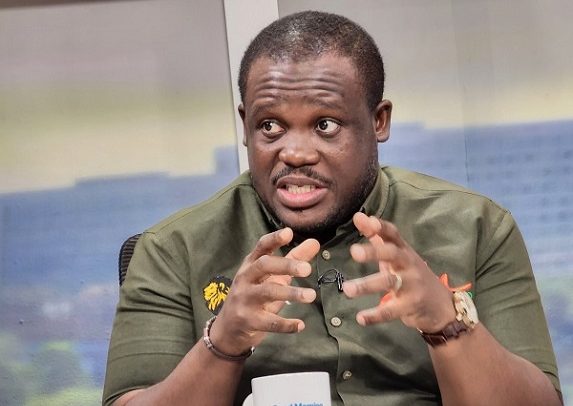





Facebook
Twitter
Pinterest
Instagram
Google+
YouTube
LinkedIn
RSS