


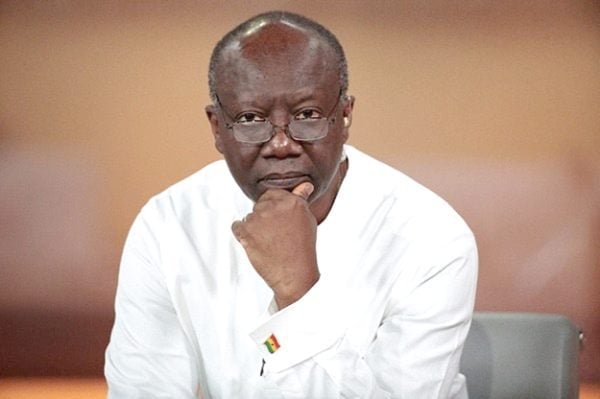
Ghana’s Minister for Foreign Affairs, Samuel Okudzeto Ablakwa, has formally appealed to the United Kingdom to exempt Ghanaian students and professionals from taking the International English Language Testing System (IELTS) when applying to study or work in the UK. The request was made during a diplomatic engagement with the British High Commissioner to Ghana, Christian Rogg, on January 6, 2026.
The discussions were part of broader talks aimed at deepening Ghana–UK relations, covering areas such as education, trade, health, security, job creation and governance. Mr. Samuel Okudzeto Ablakwa argued that the IELTS requirement is unnecessary for Ghanaians because English has been the country’s official language and the primary medium of instruction from basic education through tertiary level since colonial times. He also raised concerns about the financial burden the exam places on Ghanaian applicants.
The government’s call for the exemption of its citizens from the IELTS requirement when seeking to study or work in the United Kingdom raises an important and timely question about fairness, relevance and access in global education and labour mobility. At its core, the petition is not an attempt to lower standards, but rather a challenge to a system that may have outlived its usefulness in certain contexts – particularly for countries like Ghana, where English is the official language and the backbone of formal education and governance.
The IELTS examination was originally designed to assess English language proficiency for non-native speakers intending to study, work or migrate to English-speaking countries. Its purpose is to ensure that applicants possess sufficient language skills to function academically or professionally. In principle, this is reasonable. However, the blanket application of this requirement to all applicants, regardless of their educational background, raises concerns about equity and logic.
Ghana is an English-speaking country by constitutional and practical definition. English is the official language and the medium of instruction from primary school through university. Ghanaian students write national examinations, including the Basic Education Certificate Examination (BECE) and the West African Senior School Certificate Examination (WASSCE) in English. At the tertiary level – lectures, research, dissertations and professional training are conducted entirely in English. For decades, Ghanaian graduates have successfully studied, worked and integrated into English-speaking environments across the world, including the UK itself.
Against this backdrop, requiring Ghanaian applicants to sit and pay for IELTS appears redundant. It effectively asks students to prove competence in a language they have been educated in for over a decade. This redundancy is not merely academic but it carries real financial consequences. IELTS fees are high when converted into local currency, often costing applicants the equivalent of several months’ income.
For many qualified students, this becomes an additional barrier to accessing education abroad, undermining the very goal of international education, which is to broaden opportunity and talent exchange.
Importantly, Ghana’s request aligns with practices already adopted in other jurisdictions. Several English-speaking or English-medium countries have negotiated waivers or alternative pathways, allowing applicants to demonstrate proficiency through prior education rather than standardised tests. Universities themselves often accept proof of previous instruction in English as sufficient evidence of language competence. A formal waiver at the policy level would simply harmonise immigration requirements with academic realities.
Critics may argue that waiving IELTS could weaken quality control or open the door to inconsistencies. However, this concern can be addressed through targeted exemptions rather than a complete removal. For instance, exemptions could apply to applicants who have completed secondary or tertiary education in Ghana, while alternative assessments remain available for others. This approach preserves standards while eliminating unnecessary duplication.
Beyond education, the issue also touches on the broader Ghana–UK relationship. The UK has long benefited from Ghanaian professionals in healthcare, education, finance and other sectors. Facilitating easier access for qualified English-speaking professionals supports the UK’s own labour needs while reinforcing historic ties.
Ultimately, the call to waive IELTS for Ghanaians is about recognising context. Language testing should be a tool for inclusion, not an obstacle that disproportionately affects those who already meet the criteria it seeks to measure. If the objective is to ensure effective communication and integration, Ghanaian students and professionals have long demonstrated that they are more than capable.
The UK should, therefore, give serious consideration to Ghana’s petition. Doing so would signal a commitment to fairness, reduce unnecessary financial burdens and strengthen educational and professional exchange between the two countries.
For more news, join The Chronicle Newspaper channel on WhatsApp: https://whatsapp.com/channel/0029VbBSs55E50UqNPvSOm2z
The post Editorial: Ministry For Foreign Affairs Call To Waive IELTS Exams For Ghanaians Is Welcome News appeared first on The Ghanaian Chronicle.
Read Full Story








Facebook
Twitter
Pinterest
Instagram
Google+
YouTube
LinkedIn
RSS