


A senior bishop of the Methodist Church Ghana has directly challenged President John Dramani Mahama over his decision to sideline LGBTQI legislation, warning that the Church will not allow moral questions to be subordinated to political convenience.
Right Reverend Sampson Obeng Adjei, Bishop of the Kumasi North Diocese, issued the challenge during opening ceremony of the Diocese’s second Synod, held at Bethel Chapel, Kwadaso over the weekend, under the theme “Walking in the Word: Equipped for Every Good Work.”
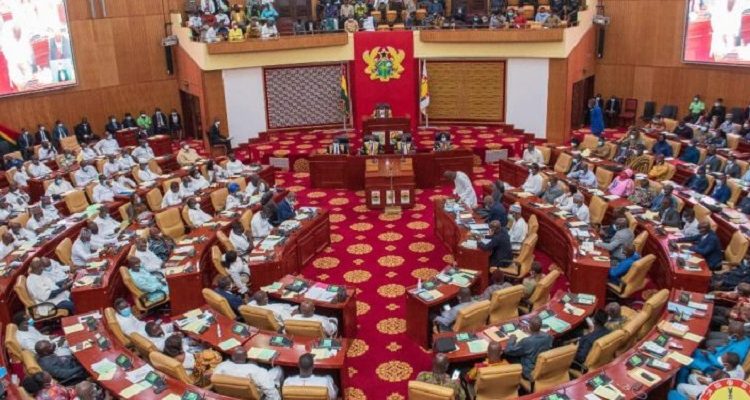
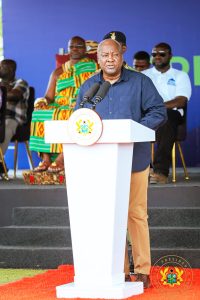
The Bishop’s remarks were an unambiguous response to President Mahama’s publicly stated position that LGBTQI legislation is, in his words, “not a priority” — a stance that has drawn sharp criticism from religious leaders across Ghana’s faith community.
“This raises a critical and unavoidable question: what has changed?” Bishop Obeng Adjei told assembled Synod members, drawing a direct line between the new administration’s posture and the outrage that greeted the previous Akufo-Addo government’s failure to assent to the anti-LGBTQI bill passed by Parliament. The logic of the Bishop’s challenge is structurally precise.
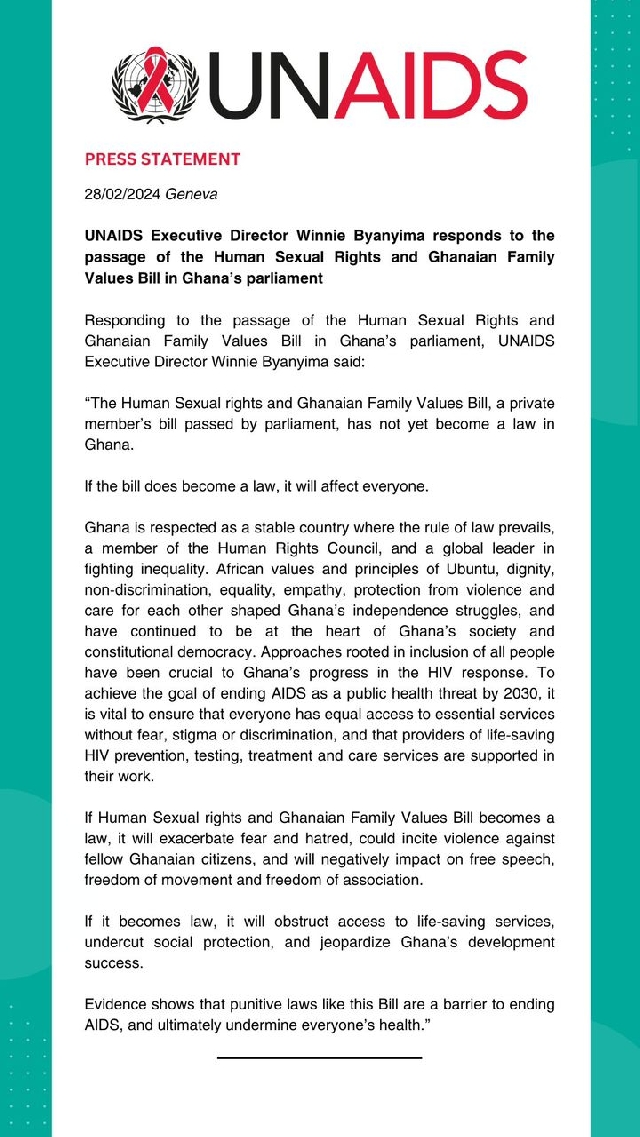
Ghana’s organised Christian community, together with other faith groups, had condemned the Akufo-Addo administration in unsparing terms for what they viewed as a politically motivated refusal to sign the bill into law, widely attributed to pressure from Western donor governments and international financial institutions.
President Mahama, now in office, has effectively adopted a parallel posture under different language. Where Akufo-Addo withheld assent, Mahama has deprioritised. The Bishop’s point is that the practical outcome is identical, and the Church’s response must therefore be consistent.
“Moral issues cannot be subject to convenience or political expediency. Leadership must demonstrate integrity, courage, and responsiveness to the deeply held values of the people,” he said.
The rebuke is politically significant. The Methodist Church Ghana is one of the country’s most institutionally established denominations, with deep roots in the Ashanti Region and beyond.
A formal Synodal statement of this nature is not rhetorical noise, it is a considered ecclesiastical position delivered through the Church’s governing assembly, and it signals that the denomination intends to hold President Mahama accountable in the same register it held his predecessor.
President Mahama, a professed Christian, has historically maintained strong ties with Ghana’s faith community.
His administration’s decision to set aside the LGBTQI question and almost certainly shaped by competing pressures from civil society, international partners and internal NDC politics, now places him in direct tension with a constituency that has been consistently and vocally opposed to any liberalisation on the issue.
Bishop Obeng Adjei framed the Church’s engagement not as partisan politics, but as the irreducible duty of Christian discipleship in public life.
“The call to discipleship extends beyond the walls of the Church into the life of the nation,” he said, adding “We are called to be salt and light, voices of truth, justice and righteousness in a society yearning for direction.”
Galamsey: The Bishop’s Second Front
The LGBTQI challenge was not the only pressure the Bishop brought to bear on Ghana’s leadership.
In equally grave terms, he escalated the Diocese’s long-standing alarm over illegal mining, galamsey, describing a situation that has deteriorated well beyond the concerns he raised at the previous Synod.
“The situation has worsened to an unbearable degree,” he said, describing the accelerating destruction of Ghana’s river systems and forest reserves.
“He rejected any framing of the crisis as a purely environmental matter, insisting instead that it constitutes “a moral crisis”, a failure of stewardship over what Christian theology holds to be God’s creation.
His call for action was directed at the full architecture of Ghanaian governance and society: government, traditional authorities, security agencies and citizens.
The breadth of that appeal implicitly indicts the multi-generational failure of enforcement that has allowed galamsey to survive and expand through successive administrations of both major parties.
For more news, join The Chronicle Newspaper channel on WhatsApp: https://whatsapp.com/channel/0029VbBSs55E50UqNPvSOm2z
The post Methodist Church Descends On Mahama Over Anti-Gay Bill Comment appeared first on The Ghanaian Chronicle.
Read Full Story







Facebook
Twitter
Pinterest
Instagram
Google+
YouTube
LinkedIn
RSS