


Africa’s ability to tell its own story is slipping not for lack of talent or platforms, but because the media industry itself is running out of money to sustain independent journalism.
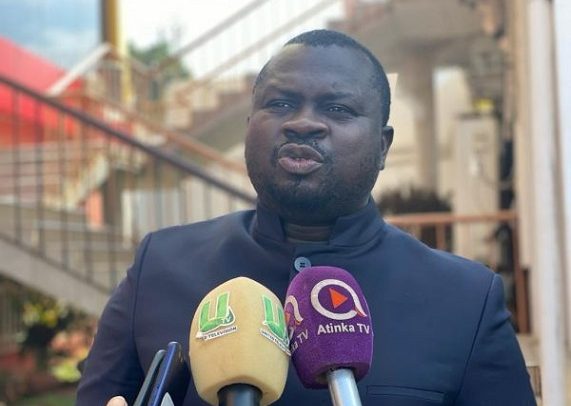
That was the stark warning from ABN Holdings Chief Executive, George Twumasi, who argued that the continent’s “narrative sovereignty” is increasingly under threat as media organisations battle shrinking revenues and weak institutional backing.
Speaking at the Media Convergence in Ghana conference organised by the Africa Media Bureau on Wednesday, April 29, 2026 Mr Twumasi said the financial instability of media houses is forcing difficult compromises that could erode editorial independence.
With traditional advertising income steadily declining, he noted, many outlets are turning to sponsored content and event-driven revenue just to survive, a shift he warned could blur the line between journalism and commercial influence.
“Our narrative sovereignty remains compromised,” he stressed, pointing to the growing dependence on non-traditional funding streams.
Twumasi attributed the crisis to deeper structural challenges, singling out Africa’s major financial institutions for what he described as a lack of commitment to the media sector.
He criticised bodies such as the African Development Bank and African Export-Import Bank for failing to prioritise investment in an industry he considers central to democratic development.
Beyond financing, he highlighted persistent infrastructure gaps, particularly unreliable electricity supply in rural communities and the high cost of internet data as barriers that continue to limit access to information across the continent.
He also pointed to a shortage of digitally skilled journalists, outdated regulatory frameworks and concerns about censorship in some countries as compounding pressures weakening the industry.
Despite the bleak outlook, Mr Twumasi maintained that the future is not without promise.
He advocated for a more integrated media ecosystem that brings together state-owned and private platforms, describing it as a potential “electronic classroom” capable of educating citizens and narrowing the information gap between rural and urban populations.
Drawing on Ghana’s experience, he said media reforms in the early 2000s helped strengthen democratic accountability through a more vibrant press.
However, he warned that in parts of Africa, the media still functions either as a fragmented opposition tool or as an extension of state propaganda.
In a complementary address, Executive Director of the Africa Media Bureau, Samuel Attah-Mensah, underscored the urgency of reimagining Ghana’s media landscape in response to rapid technological change.
Delivering the opening remarks under the theme “The Future of Media Practice, Education and Policy in Ghana,” he said the era of isolated traditional media is over, as digital innovation continues to reshape how stories are produced, distributed and consumed.
He stressed that the real challenge now is not just understanding these changes, but actively responding to them in ways that ensure sustainability and relevance.
According to Mr Attah-Mensah, the conference is intended to go beyond diagnosing industry problems, serving instead as a platform to bridge the gap between academia and practice while generating actionable solutions.
He emphasised that even as media organisations innovate, they must remain anchored in core values such as ethics, credibility and public trust.
“The future of media depends on collaboration,” he said, calling for stronger partnerships among lecturers, editors, students, professionals and policymakers.
He expressed confidence that such collaboration would lead to practical recommendations and lasting impact, positioning the conference as a critical step toward shaping a more resilient and forward-looking media industry in Ghana and across Africa.
For more news, join The Chronicle Newspaper channel on WhatsApp: https://whatsapp.com/channel/0029VbBSs55E50UqNPvSOm2z
The post Africa’s Media Houses Face Survival Crisis -George Twumasi appeared first on The Ghanaian Chronicle.
Read Full Story





Facebook
Twitter
Pinterest
Instagram
Google+
YouTube
LinkedIn
RSS