
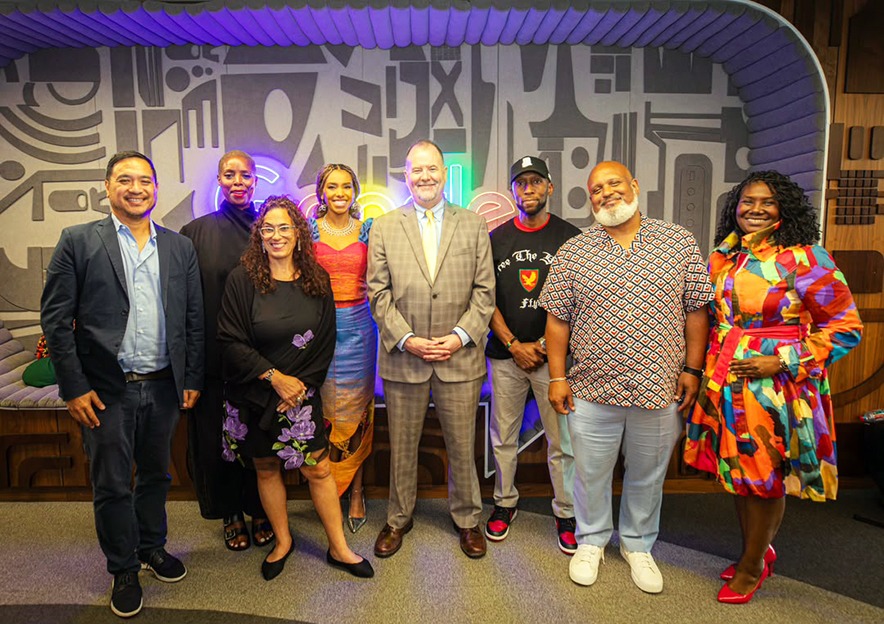

Ghana’s creative industry must move beyond celebrating artistic talent and focus on building a structured economic ecosystem capable of attracting investment, creating jobs and expanding cultural exports, stakeholders at the Creative Economy Summit 2026 Ghana have said.
The United States has identified Ghana’s creative economy as a potential driver of economic growth and stronger bilateral cooperation, while Ghana’s Diaspora Affairs Office has urged stakeholders to shift attention from proving African creativity to building the institutions needed to commercialise it.
Delivering the closing remarks at the summit, held at Google’s office in Accra, the U.S. Chargé d’Affaires to Ghana, Mr.Rolf Olson, said the creative sector should be supported by policies that strengthen intellectual property (IP) protection, uphold contract sanctity, improve production financing and inspire investor confidence.
According to Mr Olson, the creative economy has evolved beyond arts and entertainment into a strategic economic sector capable of creating employment, attracting investment, promoting entrepreneurship and strengthening Ghana-U.S. relations.
“Like any other sector, this sector creates jobs, builds competitive advantage, attracts investment and supports entrepreneurship and innovation,” he said.
Mr. Olson also encouraged Ghanaian creatives to preserve the authenticity of their stories, saying locally rooted narratives are increasingly finding global audiences through streaming platforms.
He cited the international success of Bollywood and Nollywood as evidence that compelling storytelling transcends national boundaries and urged creatives not to dilute their cultural identity in pursuit of international markets.
Strengthening Ghana-U.S. Partnership
Mr. Olson said the summit formed part of a broader U.S. effort to deepen cultural diplomacy and economic cooperation between Ghana and the United States through the creative industries.
He explained that the two-week programme preceding the summit brought leading American film and television professionals to Ghana to mentor African creatives through directing laboratories, masterclasses and public engagements.
Describing the initiative as an investment in Ghana’s creative ecosystem, he expressed optimism that the engagements would result in new partnerships, increased investment, expanded market opportunities and stronger commercial ties between the creative industries of both countries.
Beyond Proving Creativity
Earlier, the Director of Diaspora Affairs at the Office of the President, Kofi Okyere Darko (KOD), said Ghana had reached a stage where discussions about the creative economy could no longer be confined to celebrating talent.
According to him, the sector now requires the coordinated involvement of government, investors, businesses, financial institutions, technology leaders and development partners.
“Ghana’s economy has reached a stage where it cannot be discussed by creators alone. It now requires the attention of government, business, investment institutions and development partners,” he said.
KOD noted that for years the conversation had centred on proving that Ghanaians and Africans are creative, but argued that such a debate had become unnecessary because the evidence was already visible.
“The evidence already exists and it is with us. The more useful conversation is how we turn creativity into an organised economic sector to project the orange economy,” he stated.
He said the next phase of the industry’s growth should focus on strengthening intellectual property protection, improving access to finance, leveraging technology, expanding exports and creating sustainable jobs.
The summit was organised by the U.S. Embassy in partnership with the American Film Showcase and African Creative TV, with support from Google, the Diaspora Affairs Office and the Black Star Experience, brought together filmmakers, investors, entrepreneurs, technology leaders, policymakers and cultural stakeholders to explore opportunities within Ghana’s growing orange economy.
The programme featured internationally recognised creatives, including television producer Aaron Rahsaan Thomas, Hollywood producer Damien D. Smith, actress and filmmaker Joselyn Dumas, television director Rochelle Ramis, Paul Garns, President of Ava DuVernay’s ARRAY Filmworks, global media strategist Kwon Fung and Cedra Smith, founder of 6inLine and former Head of Essence Studios.
For more news, join The Chronicle Newspaper channel on WhatsApp: https://whatsapp.com/channel/0029VbBSs55E50UqNPvSOm2z
The post U.S, Ghana Push Creative Economy As Investment Frontier appeared first on The Ghanaian Chronicle.
Read Full Story



Facebook
Twitter
Pinterest
Instagram
Google+
YouTube
LinkedIn
RSS