

For six months every year, communities across five districts in Ghana’s Upper East Region face a silent crisis not from floods or storms, but from the slow, creeping devastation of the dry season.
As a result, water sources dry up, toilets become unusable, while women spend up to four hours daily just to find water for their families. Mr. Sebastian Mbabugri Agumah, Project Lead for the SIDA-CLIMB Better WASH Partnership, who spoke at a training workshop for 30 WASH journalists in Bolgatanga, described the situation as the reality of climate change in the region.
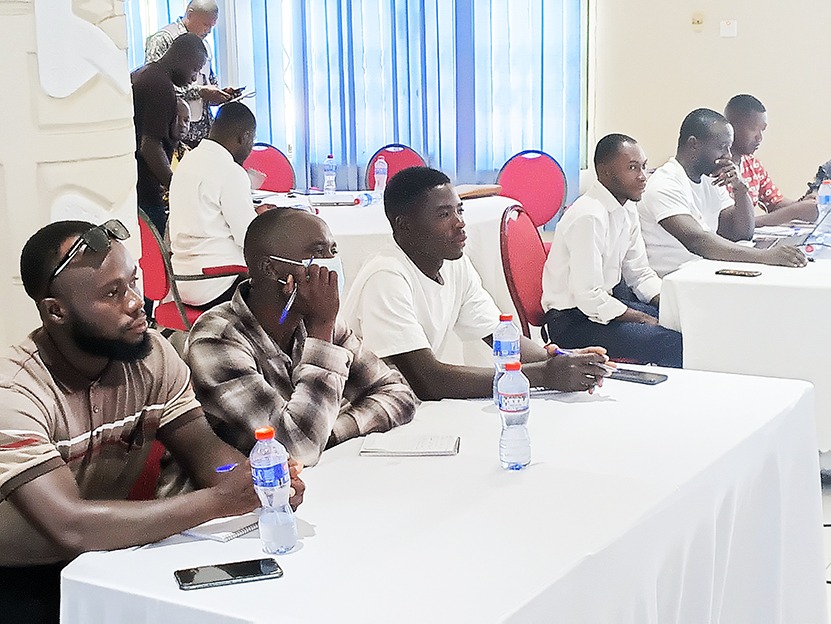
He told the journalists that the dry season now lasts almost six months each year, bringing with it water scarcity, sanitation challenges, and hygiene crises. The training, organised by the Belim Wusa Development Agency (BEWDA) in partnership with WaterAid Ghana under the SIDA CLIMB Better WASH Partnership, is aimed to equip journalists with the tools to report accurately on how climate change is affecting water and sanitation in northern Ghana and to amplify the voices of vulnerable communities.
The partnership aims to mobilise civil society and communities to hold duty-bearers accountable for climate-resilient WASH investments in five districts of the Upper East Region: Bawku West, Bongo, Kassena Nankana Municipal, Kassena Nankana West, and Nabdam.
According to him, the reality is stark in the Bawku West District adding that in the community of Agatuse, residents share a single toilet for the entire community
which is always full. Mr. Agumah noted that in Bawku West, the Bagre Dam spillage remains a major problem as it causes flooding that affects communities annually.
He said while 68% of residents have access to water, 500 households experience floods every year noting that sanitation coverage is only 15.6%, and many households lack proper toilet facilities. He also noted that rainstorms in the region are destroying schools, while wildfires have increased and are damaging WASH facilities.
He disclosed that in the Bongo District, with a population of 120,254, the major challenge is water quality. “While 82% of residents have access to water, fluoride contamination has rendered many boreholes unusable,” he said. According to the Climate Vulnerability and Resilience Assessment (CVRA) findings, 30% of boreholes are contaminated with fluoride.
He indicated that in Bongo, 30% of boreholes are contaminated with fluoride and that rebuilding toilets destroyed by floods is a major challenge for vulnerable communities who cannot afford to rebuild.
He noted that the Kassena Nankana Municipality, with a population of 137,439, faces a significant WASH gap saying while sanitation coverage is 35%, water access is only 55%. Despite the Tono Dam, which has the capacity to distribute water to about 350,000 households, many residents lack access to safe water.
Mr. Agumah reiterated that women and girls bear the burden, spending up to four hours a day searching for water during the dry season noting that while Open defecation still persists, 30% of water sources are contaminated with faecal coliform bacteria.
He said in Paga, the capital of Kassena Nankana West, 91% of households have no toilet facilities and resort to open defecation. With only 9% sanitation coverage, the lowest in the region, about 40% of households live below the poverty line and cannot afford household toilets.
He revealed that a community member shared during the vulnerability assessment that they have no toilet and the bush is their only option. The Nabdam District, with a population of 53,039, faces the highest poverty rate in Ghana at 68.6% and explained that about 55% of residents have access to water with 25% of children under five suffering from malnutrition while an estimated 95.7% of the population depends on agriculture for their livelihood.
Mr. Agumah noted that communities like Kparaboug experience severe water shortages with 60% of households relying on unprotected water sources during the dry season.
He tasked the media to undertake effective reporting that leads to action urging journalists to put pressure on duty bearers at the local and national levels to act.
The Project Lead challenged journalists to investigate duty bearers at the local level to the national level by holding them accountable and getting them to work.
The post Five Upper East Districts face annual crisis from climate change appeared first on The Ghanaian Chronicle.
Read Full Story





Facebook
Twitter
Pinterest
Instagram
Google+
YouTube
LinkedIn
RSS