


For a country that has spent decades building a modern telecommunications sector, the rising public frustration over poor network quality is becoming impossible to ignore.
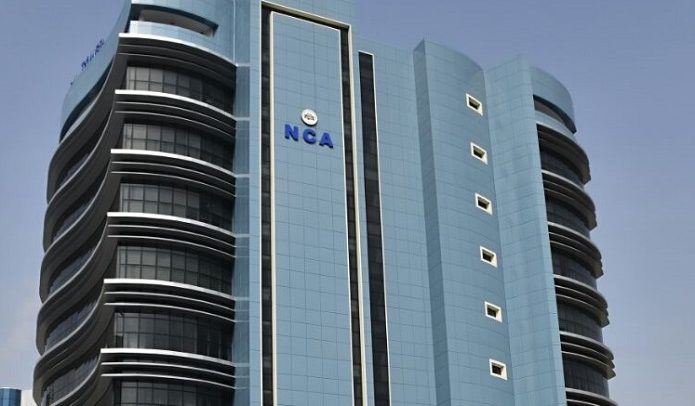
The National Communications Authority (National Communications Authority) has now openly acknowledged what many consumers experience daily.
Ghanaians are not receiving the quality of service they pay for.
Across the country, complaints about dropped calls, weak coverage and slow internet speeds continue to mount.
At a stakeholder forum in Accra marking World Telecommunication and Information Society Day, the regulator made its position clear: telecom operators will be held accountable for improving service delivery.
The NCA Director-General, Reverend Edmund Yirenkyi Fianko, stressed that the Authority would closely monitor operators’ improvement roadmaps.
These include expanding network capacity, building new sites, upgrading transmission systems, improving power reliability and rolling out advanced technologies.
It is a timely intervention. For too long, consumers have endured a widening gap between what is promised and what is delivered.
Billing systems are efficient, but service quality often falls short, eroding public trust in the sector.
The regulator has also tightened its quality-of-service benchmarks and plans to publish performance data on operators.
This is a welcome move. Transparency will help expose underperforming networks and encourage healthy competition based on real service delivery rather than marketing claims.
However, regulation alone will not solve the problem. The NCA has rightly called for shared responsibility among stakeholders.
Community members, contractors and security agencies must help protect telecom infrastructure.
Damage to fibre optic cables, often caused by careless construction work or vandalism, continues to disrupt services nationwide.
The call for a “dig-once” approach to underground installations is particularly important and should be enforced more strictly.
Coordination between utility providers is essential if Ghana is to build a stable digital backbone.
Industry stakeholders, including the Ghana Chamber of Telecommunications, the Ghana Internet Service Providers Association, the Association of Submarine Cable Operators of Ghana, all recognise the urgency of the situation.
What is now required is action, not further dialogue.
Global voices have also reinforced the need for stronger and more resilient digital systems.
The Secretary-General of the International Telecommunication Union, Doreen Bogdan-Martin, highlighted the importance of capacity building and international standards, while UN Secretary-General António Guterres called for stronger digital governance and cooperation.
Yet for Ghana, the central issue remains straightforward: reliable connectivity. Without it, digital transformation efforts in education, business and governance will continue to be undermined. The country’s digital ambitions cannot rest on unstable networks.
As the NCA prepares to publish operator performance data and intensify monitoring, telecom companies must treat this moment as a turning point. Investment in infrastructure can no longer lag behind rising demand.
At The Ghanaian Times, we echo the growing public concern: the era of poor service masked by promises must end.
Accountability must now be enforced with consistency and urgency.
Ghana’s digital future depends on it. Connectivity is not a luxury, it is an essential service.
Follow our WhatsApp Channel now! https://whatsapp.com/channel/0029VbAjG7g3gvWajUAEX12Q
The post Poor telecom services: NCA signals tougher action on operators appeared first on Ghanaian Times.
Read Full Story







Facebook
Twitter
Pinterest
Instagram
Google+
YouTube
LinkedIn
RSS