
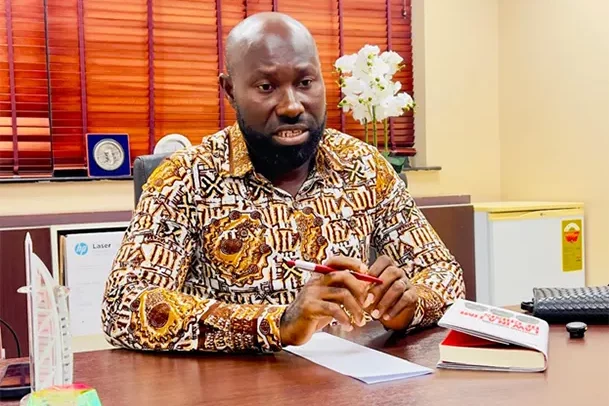

John Darko
The New Patriotic Party (NPP) has raised concerns over the process used in the allocation of the Damang mine, warning that the country risks undervaluing a critical national asset if key safeguards are not applied.
Speaking to the transaction, the NPP for Suame, John Darko, who is also a Natural Resources Law Lecturer at GIMPA, said while the party supports increased local participation in the mining sector, such efforts must be structured to maximise value for the country.
“We are not against local participation, but it must be done right so that it creates value for Ghana and does not lead to value erosion or capital flight,” the MP stressed.
The Damang mine, previously operated by Gold Fields, recently reverted to the state following the expiration of its lease.
However, Mr. Darko questioned whether the subsequent tender process adequately protected the nation’s economic interests.
Central to his concern is what he described as a lack of proportionality in the process. According to him, bidders were required to demonstrate the ability to raise about $500 million within a relatively short timeframe of seven days.
This, he argued, stands in sharp contrast to the estimated value of the asset, which he placed at approximately $7 billion based on projected reserves of about 3.5 million ounces of gold.
“How do we justify allocating an asset of that magnitude based primarily on proof of funding at a fraction of its underlying value?” he queried.
Mr. Darko further pointed to the absence of a clear, independent technical and financial valuation as a major gap in the process.
He noted that globally, transactions of such scale are typically anchored on detailed assessments of reserves, capital expenditure requirements, and long-term revenue potential, which then inform equity structures and negotiations.
Without such a valuation, he cautioned, the nation risks undervaluing its mineral resources and losing out on long-term gains.
The NPP MP also called for a stronger equity position for the state, suggesting that the nation should secure a stake of between 30 and 40 percent in the Damang operation, beyond the standard 10 percent free carried interest.
Institutions such as the Minerals Income Investment Fund, (MIIF) he added, should play a more active role in structuring such deals to ensure the country benefits from both ownership and future profits.
The MP further questioned the suitability of the tender model used, arguing that such an approach is more appropriate where the government retains ownership and merely contracts an operator or enters into a structured partnership.
In contrast, he said, outright allocation without robust valuation and negotiation risks weakening the country’s position.
He warned that the process, if perceived as rushed or opaque, could create significant risks, including erosion of public trust, the establishment of weak precedents for future resource allocations, and exposure to political interference.
For him, the debate should shift from who acquires national assets to how Ghana can maximise value from them.
“These resources are held in trust for both present and future generations,” he said, urging policymakers to adopt a more strategic and transparent approach to resource governance.
By Ernest Kofi Adu
Read Full Story



Facebook
Twitter
Pinterest
Instagram
Google+
YouTube
LinkedIn
RSS