

Minority Caucus
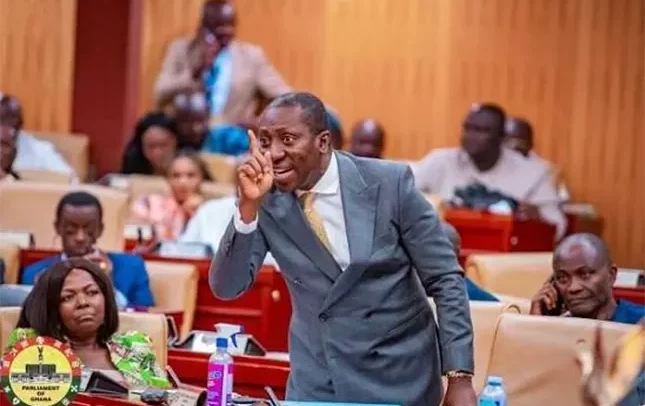
The Minority Caucus in Parliament on Wednesday staged a walkout in protest against what it described as the First Deputy Speaker’s persistent use of the Standing Orders to stifle parliamentary oversight and frustrate opposition MPs from scrutinising the government.
The protest followed a ruling by the First Deputy Speaker, Bernard Ahiafor, who disallowed a supplementary question from the Minority Leader, Alexander Afenyo-Markin, during Question Time on the government’s planned fresh biometric SIM registration exercise.
Mr. Afenyo-Markin had sought clarification from the Minister for Communication, Digital Technology and Innovations, Samuel Nartey George, on the cost of the nationwide exercise to taxpayers after the Minister indicated that subscribers would not bear any cost.
However, the First Deputy Speaker ruled that the supplementary question did not flow from the original question on the Order Paper and therefore could not be entertained under the rules of the House.
The ruling sparked an exchange between the Minority Leader and the Chair, after which Minority MPs walked out of the Chamber in protest.
Minority’s Protest
Addressing journalists after the walkout, the Minority Leader accused the First Deputy Speaker of repeatedly using parliamentary rules to intimidate opposition MPs and undermine Parliament’s oversight responsibility.
“We have observed the First Deputy Speaker has a way of using the rules to stampede parliamentary oversight,” Mr. Afenyo-Markin said.
According to the Minority Leader, backbench MPs have increasingly found it difficult to ask questions because the presiding officer routinely relies on procedural rules to prevent them from making contributions.
“The rules are not meant to be used to intimidate, frustrate and bring Parliament to a standstill,” Mr. Afenyo-Markin stated.
The Minority maintained that the question on the cost of the fresh SIM registration exercise was a legitimate matter of public interest, particularly because the government had justified the new exercise on grounds that some SIM cards had previously been registered using false, stolen or unverifiable identities.
They argued that although the Minister had assured Parliament the exercise would be free for subscribers, Ghanaians deserved to know how much the exercise would cost the state and the procurement arrangements that would govern its implementation.
According to the caucus, the previous nationwide SIM registration exercise involved significant public expenditure, making it reasonable for Parliament to seek accountability over the financing of the new exercise.
The Minority further contended that the supplementary question was admissible under the Standing Orders because it sought clarification on an answer already provided by the Minister.
They cited Standing Order 89(1), arguing that it permits Members to ask supplementary questions arising from a Minister’s response.
The caucus also claimed that even members on the Majority side disagreed with the ruling, alleging that the Majority Leader appreciated that the question should have been allowed.
Despite their protest, the Minority said the walkout was limited to expressing their displeasure over the Deputy Speaker’s conduct and stressed that they would return to the Chamber to continue participating in parliamentary business.
Minister explains new SIM registration
Earlier, responding to the substantive question, the Minister for Communication, Digital Technology and Innovations, Samuel Nartey George, explained that the government had decided to undertake a fresh biometric SIM registration exercise, officially called the Electronic Communications Numbering Resource Registration Exercise, to strengthen the integrity and security of the country’s telecommunications system.
According to the Minister, although the previous registration exercise sought to link SIM cards to verified identities using biometric validation against the National Identification Authority (NIA) database, the biometric information collected was not properly verified against the database.
This, the Minister said, enabled some individuals to register SIM cards using false, stolen or unverifiable identities, thereby undermining the integrity of the National SIM Register.
He maintained that the fresh registration exercise was intended to address those weaknesses and assured Parliament that subscribers would not be charged for the exercise.
By Ernest Kofi Adu, Parliament House
Read Full Story







-1.jpg)


Facebook
Twitter
Pinterest
Instagram
Google+
YouTube
LinkedIn
RSS