
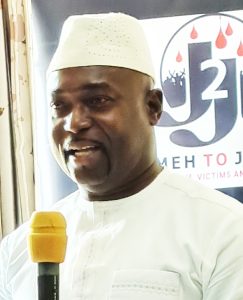

William Nyarko, Esq., the Executive Director of the Africa Centre for International Law and Accountability (ACILA), has described Ghana’s record under four cycles of the United Nations Human Rights Council’s Universal Periodic Review (UPR) as a mixed picture of significant progress, persistent implementation gaps and, in some areas, regression.
He told journalists that Ghana’s UPR experience demonstrates that recommendations accepted by the country can contribute to major reforms, but only when they are translated into domestic legislation, institutional action and measurable improvements in people’s rights.
He said some recommendations initially resisted by Ghana had eventually contributed to important reforms, while others accepted several years ago remain outstanding.
Mr. Nyarko argued that the effectiveness of the UPR should not be measured simply by the number of recommendations Ghana accepts, but by the extent to which those commitments are actually implemented.
He identified affirmative action as an example of a reform that moved from repeated UPR recommendations to legislation. He noted that Ghana accepted recommendations during the second and third UPR cycles calling for an affirmative-action framework and the passage of an Affirmative Action Bill.
Mr. Nyarko noted that although the legislative process took several years, Parliament eventually enacted the Affirmative Action (Gender Equity) Act, 2024, which has since received presidential assent.
He said the enactment represents significant progress, but stressed that the real test now lies in the implementation, compliance by public institutions and whether the law produces measurable improvements in women’s representation.
He said the experience illustrates an important feature of the UPR process, which is that a recommendation may take several UPR cycles before it produces a concrete domestic result.
The ACILA boss said Ghana’s evolving position on the death penalty provides perhaps the clearest example of the UPR’s potential to influence national human-rights policy.
During the earlier UPR cycles beginning in 2008, Ghana did not support recommendations calling for abolition of the death penalty or the establishment of a formal moratorium.
According to him, 15 recommendations concerning abolition, a moratorium and ratification of the Second Optional Protocol to the International Covenant on Civil and Political Rights (ICCPR) did not enjoy Ghana’s support in 2012.
He disclosed, however, that Ghana’s position changed substantially in 2017, when it supported recommendations calling for abolition. By the fourth cycle in 2023, Ghana supported a much larger group of recommendations concerning abolition and commutation as a result Parliament passed legislation removing the death penalty for ordinary criminal offences and replacing it with life imprisonment.
Mr. Nyarko described this development as a major human-rights achievement, while noting that full abolition remains incomplete because constitutional provisions relating to offences such as high treason remain. He identified Ghana’s commitment to enact a Code of Conduct for Public Officers as another important test of implementation.
He said Under recommendation 149.41, Nigeria called on Ghana to “continue in its efforts to swiftly enact the Code of Conduct for Public Officers” which Ghana supported.
According to Mr. Nyarko, the recommendation is particularly significant because it constitutes a specific legislative commitment rather than merely a general call to combat corruption.
“The test of recommendation 149.41 is ultimately whether Ghana enacts and implements the Code of Conduct for Public Officers Bill,” Nyarko said. He said the Bill’s continued consideration in 2026 therefore provides a concrete benchmark for assessing Ghana’s implementation of its fourth-cycle UPR commitments.
“Until the Bill is enacted and effectively implemented, Ghana cannot reasonably claim to have fully discharged the commitment it accepted before the Human Rights Council,” he said.
Mr. Nyarko also identified media freedom and journalist safety as another important measure of Ghana’s UPR implementation.
He noted that Ghana accepted a recommendation during the 2017 cycle concerning the adoption of legislation guaranteeing media freedom, which recommendations became more specific during the fourth cycle addressing attacks and intimidation of journalists, impunity, journalist safety, media freedom and access to information.
He said Ghana has established institutional mechanisms intended to improve journalist safety, but continuing reports of attacks and intimidation demonstrate that the problem has not been fully resolved.
“Accepting recommendations is only the beginning,” Nyarko said, adding that “The real measure is whether journalists can actually work without fear, whether attacks are investigated and whether perpetrators are held accountable.”
He said the continuing challenge is therefore not necessarily the absence of institutions, but whether those institutions are adequately empowered and whether perpetrators of attacks are held accountable.
On the rights of sexual minorities, Mr. Nyarko said Ghana’s UPR record is more complex, reflecting both areas of progress and significant retrogression, particularly in recent years.
He noted that Ghana has generally not supported recommendations and called for the decriminalisation of consensual same-sex relations. At the same time, Ghana has accepted or supported some recommendations concerning protection against violence and investigation of attacks against persons based on sexual orientation or gender identity.
That distinction, he said, demonstrates that Ghana has been willing to support certain protections while resisting recommendations requiring fundamental changes to the legal framework.
Mr. Nyarko said recent legislative developments, however, point to a worrying element of retrogression pointing to the passage of the Human Sexual Rights and Family Values Bill by Parliament, although the measure has not become law.
Parliament’s records currently identify the measure as the Human Sexual Rights and Family Values Bill, 2025, which was laid in February 2026.
The Bill was passed by Parliament in 2026, but the Speaker subsequently directed Parliament to reconsider it following concerns surrounding its passage and the need for broader engagement. The Speaker has indicated that Parliament can revisit a Bill even after passage, and the legislation remains subject to parliamentary reconsideration before it can proceed to presidential assent.
Mr. Nyarko said the development creates a sharp contrast between Ghana’s UPR engagement and its recent legislative direction.
“On LGBTQI issues, the record is not simply one of progress or stagnation. There has been progress in recognising the need to protect people from violence and abuse, but there is also a serious concern about retrogression in the direction of recent legislation,” he said.
He stressed that the Bill should not be described as an enacted law at this stage because it remains subject to reconsideration and has not received presidential assent.
The development is particularly significant in the context of Ghana’s UPR record because recommendations concerning decriminalisation and stronger protection for sexual and gender minorities have repeatedly been raised by UN member states, while Ghana has generally noted or declined to support the substantive recommendations.
Mr. Nyarko said the situation presents a direct test of Ghana’s approach to its international human-rights commitments and its obligations under the Constitution and international human-rights instruments.
While Nyarko highlighted areas of progress and regression, Mr. Jonathan Osei Owusu, Executive Director of the POS Foundation, identified the Property Rights of Spouses Bill as one of the clearest examples of a longstanding UPR implementation challenge.
Mr. Osei Owusu noted that Ghana supported a 2012 recommendation from Iraq calling for gender-equality measures, including adoption of the Property Rights of Spouses Bill.
In 2017, Ghana again supported Australia’s recommendation calling for passage of gender-equality legislation, including the Property Rights of Spouses Bill yet the legislation remains outstanding.
He noted that the issue is particularly significant because the obligation is not simply a policy commitment. Article 22(2) of Ghana’s 1992 Constitution requires Parliament to enact legislation regulating the property rights of spouses.
Mr. Osei Owusu said the repeated acceptance of the recommendation without final enactment illustrates the gap that can emerge between Ghana’s international commitments and domestic implementation.
He also pointed to community sentencing as a clear example of how a UPR recommendation can eventually translate into domestic legislative reform.
During Ghana’s third UPR cycle in 2017, the Netherlands recommended that Ghana consider alternatives to imprisonment for minor offences to help address prison overcrowding which Ghana accepted.
Again in 2023, during the fourth cycle, Mali recommended implementation of community service to reduce prison overcrowding, and Ghana also supported that recommendation.
The progression has now produced a significant legislative outcome with the passage of the Community Service Bill in July 2026 by Parliament, providing for community service as an alternative to custodial sentences for specified offences even though the Bill awaits presidential assent to become law.
Mr. Osei Owusu stressed, however, that the legislation did not emerge from the UPR process alone highlighting the exceptional and sustained role played by Ghanaian civil society, particularly the POS Foundation, in moving non-custodial sentencing from advocacy to legislation.
The Foundation has worked for years on criminal-justice reform, including the development and advocacy for a non-custodial sentencing framework. Its work has involved engagement with government institutions, Parliament, the Judiciary, the Ghana Prisons Service, the Attorney-General’s Office and other stakeholders.
For more news, join The Chronicle Newspaper channel on WhatsApp: https://whatsapp.com/channel/0029VbBSs55E50UqNPvSOm2z
The post Feature: Ghana’s Human Rights Records Improvement In Spite Of Gaps And Retrogression appeared first on The Ghanaian Chronicle.
Read Full Story









Facebook
Twitter
Pinterest
Instagram
Google+
YouTube
LinkedIn
RSS