


- record gains, narrow foundations in stock market
- a banner year exposes fault lines in equity market
By Joshua Worlasi AMLANU & Ebenezer Chike Adjei NJOKU
The equity market delivered one of its strongest performances in recent history during 2025, capping a year that many investors saw as a turning point after prolonged macroeconomic strain and domestic debt restructuring.
The Ghana Stock Exchange benchmark index rose 79.4 percent to close at 8,770.25 points, its highest annual return since 2004. Banking stocks led this advance with the Financial Stocks Index gaining 95.2 percent, reflecting a sharp re-rating of lenders and insurers as balance sheets stabilised and confidence gradually returned.

Trade values surged alongside prices. Equity transactions totalled about GH¢3.74billion in 2025 – nearly 74 percent higher than the previous year – while market capitalisation climbed 54.5 percent to roughly GH¢172billion by the end of December. On the surface, these numbers pointed to a broad-based recovery and renewed investor appetite for Ghanaian assets.
A closer examination of market data however reveals a rally built on narrow foundations. Trading activity was highly concentrated among a small group of custodians and driven by liquidity in just two sectors, raising questions about how resilient the market would be in the face of a sudden shock.

Custodian data from the exchange show that three institutions dominated equity trading throughout the year. Standard Chartered Bank, Stanbic Bank and Prudential Bank together accounted for about 77 percent of equity trades total value in 2025. Standard Chartered alone handled just over 42 percent of traded value, equivalent to roughly GH¢1.38billion and close to 46 percent of total volumes. Stanbic accounted for about 21 percent of value traded while Prudential handled about 14 percent.

All other custodians combined shared less than a quarter of market activity. Republic Bank, Ecobank and CAL Bank together accounted for about 16% of value traded, with the rest split among smaller players.
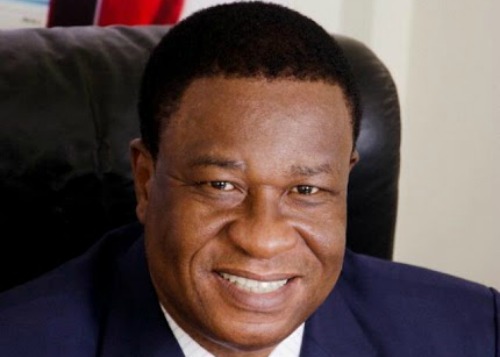
According to Dela Herman Agbo, chief executive officer of EcoCapital HYPERLINK “https://ecocapinvestment.com/nnewsletters/” Investment, this level of concentration introduces what he describes as elevated structural liquidity risk.
“The Ghana Stock Exchange exhibits a high degree of custodial and trading concentration,” Mr. Agbo said. “With more than three-quarters of equity transactions routed through three custodians, the market is exposed to single-point operational and settlement risk. From a portfolio construction standpoint, that materially increases liquidity risk premia – especially during periods of stress.”
He noted that any disruption affecting those custodians, whether operational, regulatory or reputational, could impair trade execution and settlement cycles, undermining price discovery and triggering abrupt valuation shifts even in fundamentally sound stocks.
“This is not a theoretical risk,” he said. “In a shallow market structure, localised disruptions can very quickly become market-wide liquidity events.”
The same pattern of concentration is evident when the market is viewed through a sectoral lens. Two sectors, ICT and food & beverages, accounted for more than 70 percent of total equity value traded in 2025. ICT stocks made up about 36 percent of traded value and nearly half of total volumes, while food & beverage counters contributed roughly 35 percent of value and a third of volumes.
By contrast, finance – despite delivering the year’s strongest price gains – accounted for less than 10 percent of total value traded. Other sectors central to Ghana’s real economy barely featured. Agriculture, mining and manufacturing together contributed less than 0.2 percent of total traded value, while insurance accounted for about 0.4 percent.
In practice, much of the ICT activity was concentrated in a single heavyweight stock, MTN Ghana, which remains the exchange’s most liquid counter and a key anchor for index-tracking and income-focused investors. Consumer staples stocks provided a second pool of liquidity, supported by relatively stable earnings and defensive appeal during a period of economic adjustment.
“The telecom segment effectively functions as the equity market’s primary liquidity anchor,” Mr. Agbo said. “Thais means sector-specific policy or regulatory changes are not contained within that sector. They transmit directly into market-wide liquidity and volatility.”
He added that regulatory or fiscal measures affecting telecom operators – such as additional levies, pricing controls or higher spectrum costs – could have systemic implications for the exchange, influencing index performance and investor sentiment well beyond the sector itself.
This structure raises several probing questions for investors: How diversified is a market wherein two sectors dominate liquidity? What happens to price discovery if the main liquidity anchor faces regulatory pressure? And how effective is diversification in a market where sector-specific risks can quickly become market-wide risks?
Exchange-traded funds further highlight the nature of participation in the market. ETFs accounted for about 17 percent of total value traded in 2025 but less than 1 percent of volumes, indicating that activity was driven largely by institutional block trades rather than frequent secondary-market turnover.
Analysts say this points to portfolio rebalancing by large investors rather than sustained inflows from a broad investor base.
This narrow liquidity base contrasts sharply with the scale of price gains recorded across individual stocks. Several counters posted exceptional returns. Clydestone (Ghana) led the market with a gain of more than 1,400% and SIC Insurance rose about 344 percent, while Ecobank Ghana climbed nearly 285 percent. GCB Bank, Access Bank Ghana and TotalEnergies Marketing Ghana all more than doubled.
These gains helped lift the indices, but the backdrop was one of declining volumes. Total equity volumes fell by more than 22 percent compared with 2024 even as values surged. Fewer shares were changing hands, but at much higher prices.
According to Agbo, that divergence is central to understanding the 2025 rally.
“The equity price appreciation reflects a combination of selective earnings re-rating and liquidity-driven price effects,” he said. “While some issuers showed genuine improvements in earnings visibility and balance sheet strength, the contraction in trading volumes tells you that price movements were amplified by thin free floats and constrained sell-side liquidity.”
In such an environment, he said, marginal inflows can have an outsized impact on valuations, pushing prices higher without a commensurate increase in participation.
“This underscores the importance of adjusting valuation frameworks,” Mr Agbo said. “In markets like Ghana you need to think in terms of liquidity-adjusted multiples, not just headline earnings metrics.”
The divergence between equity and debt markets in 2025 adds another layer to the story. Trading on the Ghana Fixed Income Market reached a record GH¢245.8billion during the year, up more than 41 percent from 2024 and exceeding pre-restructuring levels last seen in 2022. Government notes and bonds accounted for about 69 percent of that volume while Treasury bills contributed roughly 25 percent. Corporate bonds made up less than 6 percent.
Secondary-market yields on government securities remained elevated, mostly between 14.8 percent and 16.1 percent toward year-end, offering positive real returns as inflation moderated. Market participants say the rebound in fixed-income trading reflects renewed confidence in government securities and improved secondary-market liquidity following the domestic debt exchange programme.
The contrast is stark. While fixed income recorded growth in both volume and value, equities delivered strong price gains alongside falling volumes. The pattern suggests institutional investors were more comfortable rebuilding positions in government securities, while equity exposure remained concentrated in a limited set of stocks and intermediaries.
From a structural perspective, the 2025 equity rally combined three distinct dynamics: ICT and consumer staples provided most of the liquidity; financial stocks drove price momentum through a post-restructuring re-rating; and a small number of outliers generated outsized gains in thin trading conditions.
For the CEO of EcoCapital Investment, the challenge now is how to broaden the market without undermining returns.
“Enhancing resilience does not mean suppressing performance,” he said. “It requires targetted, market-oriented reforms.”
He pointed to three priorities: expanding the supply of listed companies, particularly from underrepresented and growth-oriented sectors; strengthening liquidity through structured market-making frameworks and higher free-float requirements; and broadening the investor base by deepening domestic institutional participation and calibrated retail development.
“Collectively, these measures improve depth and shock absorption,” he said. “They support sustainable long-term returns rather than short-term price spikes driven by concentration.”
In 2026, investors are weighing whether the rally can broaden across sectors and intermediaries or whether concentration will remain a defining feature of Ghana’s equity market. Can new listings and higher free floats dilute the dominance of telecoms and consumer staples? Will financial stocks continue to attract capital if interest rates fall and margins come under pressure? And how exposed is the market to a sudden shift in foreign investor sentiment?
The post Equity rally masks deep concentration risks appeared first on The Business & Financial Times.
Read Full Story









Facebook
Twitter
Pinterest
Instagram
Google+
YouTube
LinkedIn
RSS