
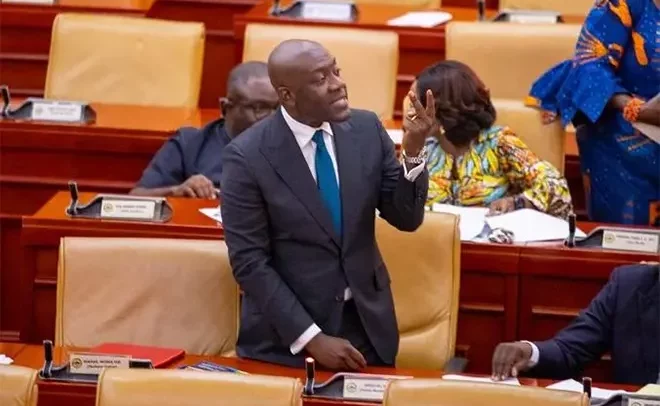

Kojo Oppong Nkrumah
The Minority in Parliament has accused the government of failing to implement about GH¢30 billion worth of projects, jobs and programmes captured in the 2026 Budget, arguing that the shortfall has stalled development across the country despite the government’s claims of fiscal discipline.
Leading the criticism during the debate on the 2026 Mid-Year Budget Review, the Ranking Member on Parliament’s Economy and Development Committee and New Patriotic Party (NPP) Member of Parliament (MP) for Ofoase-Ayirebi, Kojo Oppong Nkrumah, said the Finance Minister failed to account for the implementation of the government’s economic programme as required under Section 28 of the Public Financial Management Act.
According to him, the law makes the mid-year review a statutory platform for the Finance Minister to report to Parliament on how much of the approved economic programme has been executed and what remains outstanding.
Mr. Oppong Nkrumah dismissed claims by the government communicators that the 2026 review was historic because the Finance Minister did not seek additional appropriations from Parliament.
He argued that the real issue was not whether supplementary funding was requested, but whether the government had delivered on the programmes approved in the budget.
“This is not the first time a finance minister has presented a mid-year review without requesting additional resources,” he said, and added, “What has happened for the first time is that a finance minister has presented a mid-year review without telling the country how much of the economic programme has been executed and how much has not.”
GH¢30bn Under-execution
The Ofoase-Ayirebi MP said figures contained in Appendix 2A of the Mid-Year Budget Review showed that the government had under-executed the budget by approximately GH¢30 billion at the end of the first half of the year.
He maintained that the amount represented projects, employment opportunities and government programmes that had been promised to Ghanaians but had not been delivered.
“The reason many constituencies do not have projects going on is because this government has under-executed the budget by GH¢30 billion,” he asserted.
Mr. Oppong Nkrumah also challenged the Finance Minister’s explanation that expenditure restraint was necessary to meet the International Monetary Fund (IMF)-supported primary balance target of 1.5 percent.
He argued that fiscal targets should be achieved after implementing planned economic programmes rather than by withholding expenditure.
He further criticised indications that the government may reduce the primary balance target to 0.5 percent in 2027, describing the move as a retreat from the fiscal discipline it has consistently promoted.
“The solution is not in lowering the primary balance. The solution is in paying more attention to your revenue measures so that you generate the revenues you need,” he stated.
Impact on Public Services
The Ranking Member argued that the government’s spending restraint had come at a significant social cost.
He linked the alleged under-execution of expenditure to inadequate funding for flood control projects, claiming that delayed investment contributed to the devastating floods that claimed 34 lives while six others remained missing.
He further alleged that the Ministry of Food and Agriculture had been unable to access about GH¢1.6 billion required for fertilisers and other agricultural interventions, despite the government claims that the funds had been released.
According to him, shortages in agricultural support had contributed to rising food prices.
He also accused the government of delaying financial clearance for the recruitment of teachers and health workers, leaving thousands of qualified young people unemployed while schools and health facilities struggled with staffing shortages.
Mr. Oppong Nkrumah further argued that suppressed government spending had reduced demand within the economy, contributing to lower inflation figures while ordinary Ghanaians continued to face a high cost of living.
He also criticised the government for increasing import duties after previously promising to reduce them.
Government Responds
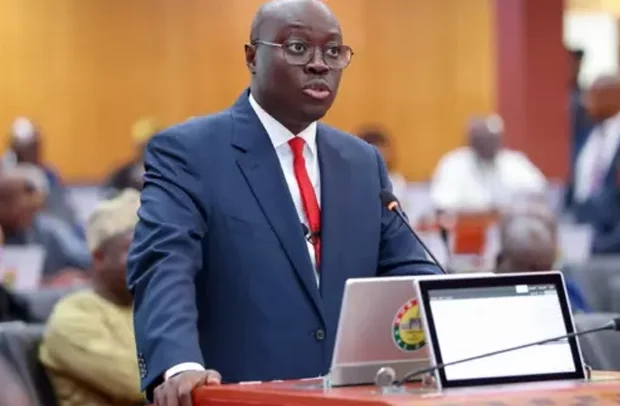
Responding to the Minority’s claims, Chairman of Parliament’s Economy and Development Committee and National Democratic Congress (NDC) Member of Parliament for Amenfi West, Eric Afful, defended the government’s fiscal performance, insisting that the country had largely met or exceeded its economic targets for the first half of 2026.
He rejected suggestions that government revenue had fallen significantly short of expectations.
According to him, domestic revenue was projected to reach 7.9 percent of Gross Domestic Product (GDP) by mid-year, while actual performance stood at 7.8 percent of GDP.
Mr. Afful also dismissed claims that the government had failed to spend as planned, noting that total expenditure on a commitment basis reached 8.0 percent of GDP against a half-year target of 9.9 percent.
He outlined several areas where government spending had continued, including employee compensation, interest payments, Eurobond debt servicing and payments to domestic bondholders under the Domestic Debt Exchange Programme.
He said these expenditures had helped sustain economic activity while restoring confidence in the financial sector.
The Amenfi West MP further argued that the nation’s improving macroeconomic indicators demonstrated prudent fiscal management.
By Ernest Kofi Adu, Parliament House
Read Full Story



.jpg)



Facebook
Twitter
Pinterest
Instagram
Google+
YouTube
LinkedIn
RSS