


The flagship policy of the running National Democratic Congress (NDC), the 24-hour economy, has split Parliament into two. Whereas the majority insists it is the game changer for the economic progress of the country, the minority thinks otherwise.
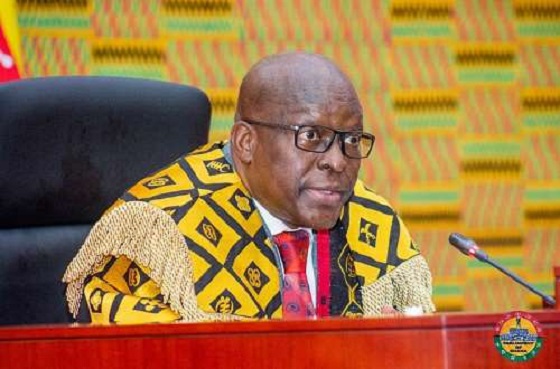
During proceedings on Thursday, February 5, 2026 the Bill to establish a 24-hour economy authority was read the second time. The second reading paved the way for debates on the policy document as laid before Parliament.
Typical of such processes when a government policy requires parliamentary backing, both sides stood their grounds.
The minority termed the creation of the Authority as duplication, but the majority held that it was to help in the co-ordination of the policy.
MAJORITY
The Chairman of the Finance Committee, Isaac Adongo, argued that there were different variants of the policy. He said it was not compulsory for businesses to operate a strict three-shift system but could do two. “But that doesn’t mean that it is still not a 24-hour economy,” he added.
He argued that schools were being built already in the country, but the Ghana Education Trust Fund (GETFund) was also set up.
“Was it because we were not building schools? We were in this country when our district assemblies were developing our communities, but we came here and set up development authorities,” he added.
The Member for Adaklu, Governs Kwame Agbodza, also argued that there was no duplication. He said that “the same people who found it necessary, despite the fact that we had the Ghana Education Trust Fund and the Ministry of Education, and yet set up development authorities to build a six-unit classroom” could not fault the creation of the authority.
The Majority Leader, who concluded the debate, said that the 24-hour economy and the authority are not the vehicles that will create a 24-hour economy.
He said, “It is a Coordinating Secretariat that will coordinate the activities of all the other sectors, who, when they function and function properly, will deliver a very productive sector and will deliver employment.
“There is a Secretariat, but the reason why we want to invest with the Authority status is because this is a Secretariat that is going to superintend and work with ministers and sector ministries.
“So, you cannot have a simple Secretary of a Secretariat trying to superintend over ministers. That’s why it is being invested with the authority of an Authority. That is the whole idea.”
MINORITY
A member of the Finance Committee, Dr Stephen Amoah, urged politicians and the House to deal with what he called “policy clichés”, which he said has not helped the country. He claimed that the government had not thought through the policy.
He read the object of the bill, which is to establish the 24-hour economy authority to ensure the integrated sustainable transformation of national systems for economic production, supply chain, marketing and labour power development and to provide for related matters.
According to him, the country was already practising what the policy seeks to do. “When it comes to the public service, security and health, we are already running a 24-hour economy. We are running a shift. So their emphasis was on the economic development.”
However, he claimed that the government had not done anything to achieve the second leg of the policy of “building factories, manufacturing factories that will employ thousands of Ghanaians and running eight-hour shifts three times a day or three phases.
“What have they done so far to attain that goal? Mr Speaker, this is a strategic drift. It is impossible. It’s just a fallacy. It’s not going to work anyway,” he opined.
The Member of Parliament for Damongo, Samuel Abu Jinapor, hammered on the emphasis of the policy – one job, three people, three shifts.
Citing that institutions like the DVLA, Customs and others already operate 24 hours, the MP said the government did not need an authority for their promise.
“Mr Speaker, with the greatest of respect, I want to submit that you do not need an authority to fulfil your promise of ensuring that DVLA, Customs, Ports and Harbours, the Passport office and all these public institutions, which were enlisted in their own manifesto operate 24 hours in three shifts of eight hours. You could have done that within 100 days of assuming office, because they exist.
“Mr Speaker, let me conclude by indicating that it has taken them one whole year to put together a policy document. Mr Speaker and indeed, when they themselves committed 7% of the 400 million USD required to operationalise a 24-hour economy, even the 7%, they have not fulfilled it.”
The Member for Ofoase-Ayirebi, Kojo Oppong Nkrumah, on his part indicated that the 24-hour economy authority “is just going to be a ‘jobs for the boys’. It’s just going to be an authority where we’ll have another CEO, three deputy CEOs and a Corporate Affairs Manager.”
He stressed that, “if that was all about the policy, then the minority has concluded that the 1D1F programme was a whole lot better than this 24-hour economy bill, which they have brought before us.”
He continued that, “What we are going to do is create this bureaucracy, pay all this money and now wait for the private sector to come. Then, Mr Speaker, we are doing ourselves a big disservice.
“ It is their policy. They have decided this is how they want to implement it. We caution them in good faith that if this is what they hope will deliver a 24-hour economy, it is time to reconsider and come up with something that can deliver.”
Meanwhile, at the time of filing this report last evening, the House was dealing with the over 70 proposed amendments to the bill.
The post Majority, Minority Split Over 24-Hr Economy appeared first on The Ghanaian Chronicle.
Read Full Story








Facebook
Twitter
Pinterest
Instagram
Google+
YouTube
LinkedIn
RSS