


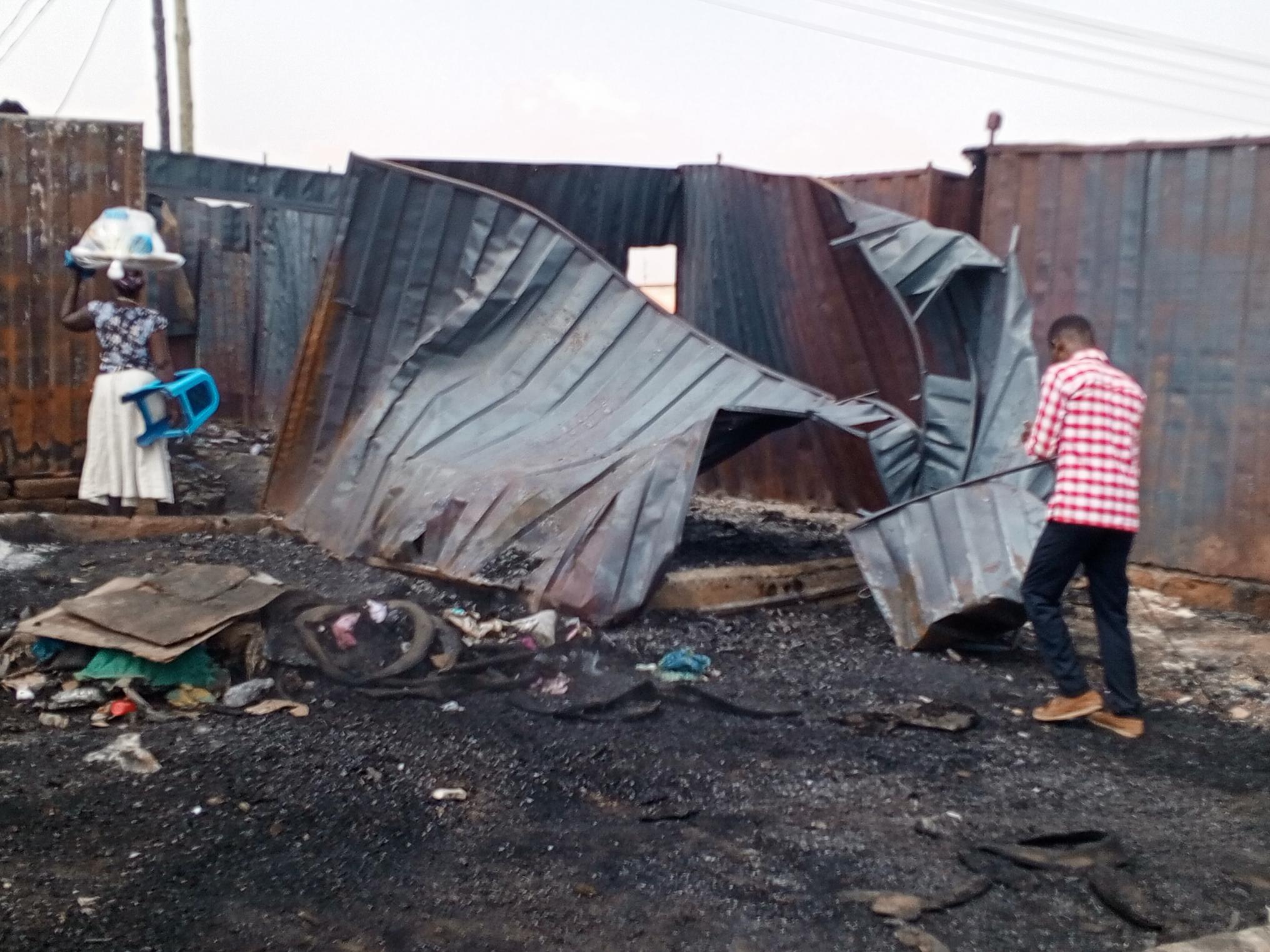
Six people have died, following a devastating fire outbreak involving a petrol tanker and several vehicles on the Accra–Nsawam Highway, near Okanta, in the early hours of Saturday, February 14, 2026.
The Ghana National Fire Service (GNFS) confirmed that the fire occurred around 4:45 a.m. and involved a petrol tanker carrying approximately 54,000 litres of fuel, a VIP bus, three saloon cars and four motorcycles.
Firefighters from the Suhum Fire Station responded to the distress call and arrived to find a fully developed vehicular fire.
Reinforcements from the Bunso Fire Station were later called in to help control the intense blaze, which was brought under control at 8:24 a.m. and completely extinguished by 11:08 a.m.
Fifteen casualties were recorded. Three victims died at the scene while three others later succumbed to their injuries at the Koforidua Regional Hospital. Seven survivors remain hospitalised.
Preliminary investigations suggest the fire may have been triggered by sparks generated during attempts by some individuals to illegally siphon fuel from the tanker using cutting tools, igniting highly flammable petrol vapours.
Once again, lives have been lost not simply because of an accident, but because of a dangerous and recurring human response to accidents involving fuel tankers.
Anytime a tanker overturns or is involved in a crash in this country, a predictable scene unfolds. Crowds gather. Containers appear.
People rush toward leaking fuel as though it were a windfall blessing rather than a ticking bomb. The smell of petrol fills the air, but caution disappears. This culture of rushing to siphon fuel must be confronted honestly. It is illegal. It is reckless and it is often fatal.
Petrol vapour is extremely volatile. It does not need a large flame to ignite, just a spark. A cutting tool, a running engine, even friction can trigger an explosion powerful enough to engulf vehicles and human beings within seconds. That is precisely what preliminary investigations suggest happened near Okanta.
Why do we keep repeating this behaviour? Part of the answer lies in economic hardship. Some see spilled fuel as free commodity in difficult times. But hardship cannot justify gambling with life. No amount of petrol is worth a coffin.
Another part of the problem is weak enforcement. Accident scenes are too often left vulnerable to crowd invasion before security perimeters are firmly established. Police response must be swift and decisive. Roads must be cordoned off immediately. Access must be restricted without compromise.
There is also a gap in public education. Fire safety warnings often surface after tragedy, then fade. We need sustained national education through schools, media, churches, mosques and community leaders about the invisible dangers of fuel vapour and the science behind such explosions.
There is also our societal attitude toward risk. We take things too lightly. We assume “it won’t happen to me.” We watch others scoop fuel and convince ourselves it is safe enough.
The Okanta tragedy should not be reduced to statistics. It should serve as a turning point. Authorities must prosecute illegal siphoning where evidence exists. Emergency response coordination must improve.
Tanker transport safety protocols should be reviewed. Communities must begin to self-police such dangerous behaviour instead of encouraging it.
Every explosion follows the same script. An accident, a crowd, a spark, flames, death and mourning, we know the script. What we lack is the will to change it.
Until we stop running toward fuel spills, we will continue running into funerals.
For more news, join The Chronicle Newspaper channel on WhatsApp: https://whatsapp.com/channel/0029VbBSs55E50UqNPvSOm2z
The post Editorial: Petrol Tankers, Fire Outbreaks And Matters Arising appeared first on The Ghanaian Chronicle.
Read Full Story


Facebook
Twitter
Pinterest
Instagram
Google+
YouTube
LinkedIn
RSS