


Chairperson, 2025 Constitution Review Committee, Henry Kwasi Prempeh has indicated that the 1992 Constitution grants the President extensive powers that go beyond what is necessary for effective governance in Ghana.
He gave the remarks during a public lecture on the topic Exploring the implications of the constitutional reform and the choices ahead for Ghana’s democracy at the School of Communication Studies of Wisconsin International University College, Ghana in Accra yesterday.
According to Prof. Prempeh, while the 1992 Constitution of Ghana has ensured political stability and peaceful transfers of power over the years, experience has shown that some aspects of the document require reforms to improve governance outcomes.
He explained that Ghana has experienced 33 years of uninterrupted constitutional rule under the Fourth Republic, describing it as the longest period the country has operated under a single constitution.
Prof. Prempeh noted that the country has recorded several peaceful transitions of power between rival political parties through elections, adding that no president has attempted to extend their constitutionally mandated term limits.
Despite these achievements, he maintained that the longevity of the constitution alone does not mean it is perfect or superior to previous constitutions.
According to him, earlier constitutions such as the 1969 Constitution of Ghana and the 1979 Constitution of Ghana contained similar democratic provisions but did not last long due to political instability.
He explained that the endurance of the 1992 Constitution could also be attributed to external factors such as the country’s experience with military coups and the national desire to maintain democratic governance.
Prof. Prempeh noted that constitutional longevity does not automatically lead to improvements in governance or political maturity.
He indicated that several challenges including weak political parties, corruption and limited oversight of the executive arm of government continue to exist despite decades of constitutional rule.
According to him, some members of the political class often argue that the constitution has served the country well.
He however stressed that it is important to examine whether the benefits of the current political system have been evenly shared between the political elite and ordinary citizens.
Prof. Prempeh acknowledged that the Fourth Republic has delivered peace and some level of prosperity but noted that many citizens feel the benefits have not been fairly distributed.
He further explained that some critics believe the country’s governance challenges are caused by the actions of political leaders and citizens rather than the constitution itself.
While agreeing that leadership and civic responsibility are important, Prof. Prempeh emphasised that the design of the constitution also plays a crucial role in shaping governance outcomes.
According to him, a good constitution must anticipate the tendency of power to be abused and therefore provide strong checks to regulate the exercise of authority.
He stressed that the 1992 Constitution gives the President more powers than required to govern effectively, adding that such broad authority increases the risk of abuse.
Prof. Prempeh clarified that calling for constitutional review does not mean the constitution is entirely flawed.
He explained that constitutional reform is intended to apply lessons learned from years of democratic practice in order to strengthen governance systems.
According to him, the committee considered several political and constitutional developments that have taken place since the last major review exercise in 2011.
These developments include the death of a sitting president while in office, presidential election petitions, major rulings by the Supreme Court and the removal of senior officials of the Electoral Commission under Article 146 of the constitution.
Prof. Prempeh also cited the experience of a near hung parliament, the failed 2019 referendum on the election of Metropolitan, Municipal and District Chief Executives, and Ghana’s sovereign debt default in 2022 as important developments that informed the committee’s work.
He indicated that nationwide consultations conducted by the committee revealed strong public interest in constitutional reform.
According to him, many citizens expressed dissatisfaction with governance outcomes even though they continue to support democratic elections and freedoms.
Prof. Prempeh noted that many Ghanaians feel that changing governments through elections has not significantly improved their living conditions.
He added that citizens also criticised the winner takes all nature of Ghana’s political system where the party that wins the presidency controls most public appointments, contracts and opportunities.
The committee chairperson explained that many respondents called for reforms to make governance more inclusive and accountable.
He noted that several citizens supported the election of Metropolitan, Municipal and District Chief Executives to improve local governance and accountability.
Prof. Prempeh further stated that while Ghana has largely succeeded in establishing clear rules for entering and leaving political power through elections and term limits, the country still faces challenges in how power is exercised once leaders assume office.
According to him, the committee therefore focused its recommendations largely on improving the rules of play in governance, including reforms to presidential powers, public sector governance, state owned enterprises and natural resource management.
He added that the committee also proposed measures to regulate political party financing, reduce the cost of politics and limit continuous campaigning in order to allow elected leaders to focus more on governance.
Prof. Prempeh emphasised that the goal of the constitutional review is to improve the quality of governance and ensure that democracy delivers better outcomes for citizens.
By: Jacob Aggrey
The post The 1992 constitution grants the president extensive power more than necessary for effective governance – Prof. Prempeh appeared first on Ghanaian Times.
Read Full Story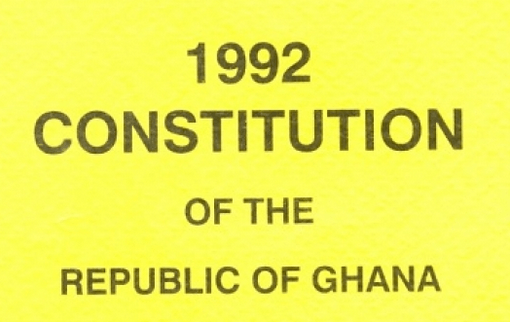



Facebook
Twitter
Pinterest
Instagram
Google+
YouTube
LinkedIn
RSS