


By Richard Kojo GABAH
Africa is back at the centre of the global mining conversation. From cobalt and copper in Central Africa to gold, lithium and manganese across West and Southern Africa, the continent holds a very large share of the minerals that will power the global energy transition.
Yet this geological advantage has not translated into a matching share of global exploration spending or project finance. The rock is attractive. The question investors keep asking is whether the rules are.
Across the continent, governments are revising mining codes to capture more value and insist on greater local content. The central challenge is to avoid choking off the very investment that is needed to unlock that value. The delicate, almost surgical task, is how to balance risk and opportunity.
How Africa’s mining codes have shifted
The history of mining regulation in Africa can be seen in three broad phases.
The first period, in the early decades after independence (1950-1990), was marked by a strong nationalist instinct. Many governments took direct ownership of mines. Foreign investment was tightly controlled and, in some cases, pushed out completely. Commodity prices were low; state companies were often poorly run and private exploration largely disappeared.
From the 1990s through to around 2010s the pendulum swung in the opposite direction. Under pressure from debt crises and structural adjustment programmes, governments opened their mining sectors. New laws simplified licensing, cut taxes and royalties and introduced stability agreements. These reforms did what they were designed to do. They attracted capital, technology and companies that were willing to take geological and political risks. Export earnings rose and many of the mines that dominate today’s production were built in this period. At the same time, social and environmental rules were weak and enforcement even weaker. Communities often felt that they saw the dust but not the benefit.
This current phase (from 2015s) is defined by a search for resource sovereignty. Citizens want to see more of the upside. Since the middle of the last decade, many countries have revised their mining laws to raise royalties, expand state equity, tighten local content and push for more beneficiation. The intention is to correct past imbalances, but the way some of these changes have been introduced has also created uncertainty.
What is inside a modern African mining code
Although every jurisdiction is different, most African mining codes share a common structure.
They set out how exploration and mining licenses are granted, renewed and revoked. They define ownership of minerals in the ground and the security of tenure for investors. They specify corporate tax, royalty rates, any free carried interest for the state, and whether there are extra levies on windfall profits or on particular commodities such as lithium or uranium. A comparative view of African mining regimes shows, for example, royalty ranges of roughly 5% to 10% and free carried interests often between 10% and 20% across a sample of West and Southern African countries.

Modern codes also regulate local content and beneficiation. They may require a certain share of employees to be citizens, a minimum proportion of goods and services to be procured from local companies and, in some cases, that minerals be processed or refined within the country. There are provisions on community agreements, social investment obligations, environmental protection, health and safety, transparency and dispute resolution.
In other words, the mining code is not an abstract legal document. It is the rulebook that shapes who takes risks, who gets rewarded and how long projects survive.
As a mining finance analyst, I work with these rules every day. When I evaluate the economics of a new project, a single percentage point change in royalty or a six-month delay in receiving a permit can wipe tens of millions of dollars from a project’s value. In conversations with institutional investors and lenders, one theme keeps coming up: capital flows first to countries where the rules are clear and stable, even when the tax burden is higher. All of this does not only influence shareholder returns. It can determine whether a project receives funding at all. From that investor lens three tests matter most. The first is predictability of fiscal terms. The second is clarity of local content obligations. The third is credibility of dispute resolution. Jurisdictions that pass all three tests tend to attract deeper pools of long-term capital, while those that fail them find that even world-class ore bodies struggle to get financed.
When reform creates uncertainty
In several countries, well intentioned reforms have unsettled investors because of how they were carried out.
The Democratic Republic of Congo increased royalties on key minerals and introduced additional taxes on super profits in its 2018 mining code, while weakening earlier stability clauses. Industry reactions focused not only on the higher numbers, but also on the perception that some of the changes were retroactive and that the goalposts might move again.
Tanzania undertook sweeping changes to its mining laws from 2017, increasing state participation to at least 16% free carried interest and tightening local content. Again, the desire to secure more benefit for citizens is understandable. Many investors, however, were unsettled by the speed of the reforms, the breadth of the changes and the number of disputes that followed before a new equilibrium was found.
Zambia has adjusted its fiscal regime for mining multiple times over the past decade. The issue has not been that the state wishes to be paid fairly. The concern from investors, lenders and project partners has often been that it is difficult to plan long range projects when fiscal policy shifts repeatedly in short cycles.
In the Sahel, political instability and the involvement of foreign security contractors in mining also make investors wary. Mali’s new mining code, which sharply increases royalties and local ownership requirements, has already triggered high profile disputes and arbitration and has been described by some in the gold industry as too harsh to justify new projects under current conditions.
None of these examples suggest that governments should avoid reform. They do suggest that the process, timing and communication of reform matter as much as the content.
South Africa, a cautionary tale on ownership rules
South Africa offers an important lesson for the rest of the continent. The country’s Mining Charter, in its latest form, requires new mining rights to have at least 30% Black ownership, together with demanding procurement and employment equity targets.
The objective of correcting the injustices of apartheid is beyond dispute. But frequent revisions to the Charter, uncertainty over once empowered, always empowered rules and the possibility of even higher ownership thresholds have all been cited by many in the industry as contributing factors behind softer exploration budgets, delayed investment decisions and, in some cases, the relocation of head offices and capital to other jurisdictions. The policy debate in South Africa today is therefore not about whether to transform the sector, but about how to do so in a way that provides enough stability and certainty to keep investment flowing.
The message is not that empowerment should be abandoned. It is that ownership and transformation rules must be stable, clearly defined and realistically implemented if they are to change the industry without hollowing it out.

When regulation builds partnership
There are also African countries where regulation has become a competitive advantage.
Botswana is the most cited example. Through clear laws, respect for contracts and patient negotiation with private partners, the country has secured increasing benefit from its diamond sector while remaining high on investor rankings.
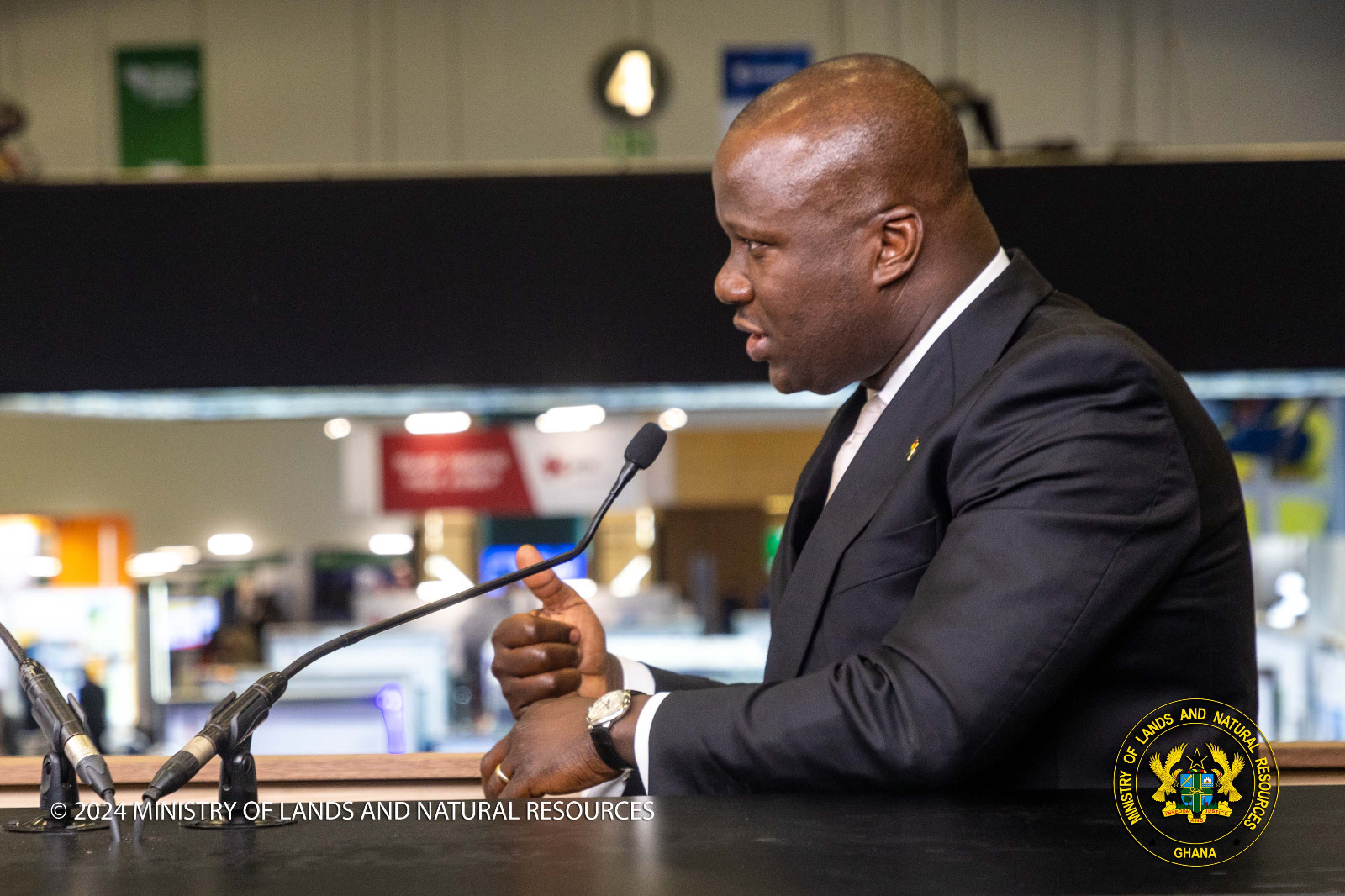
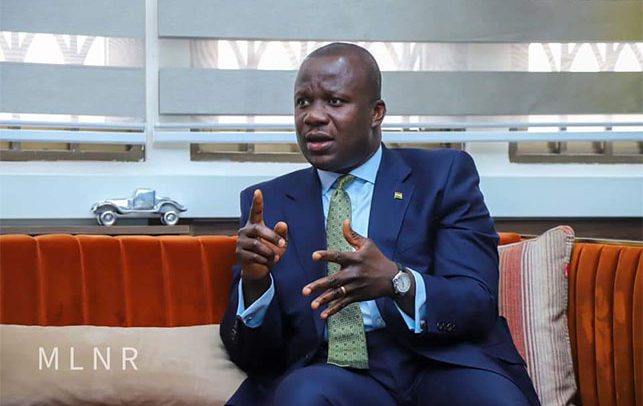
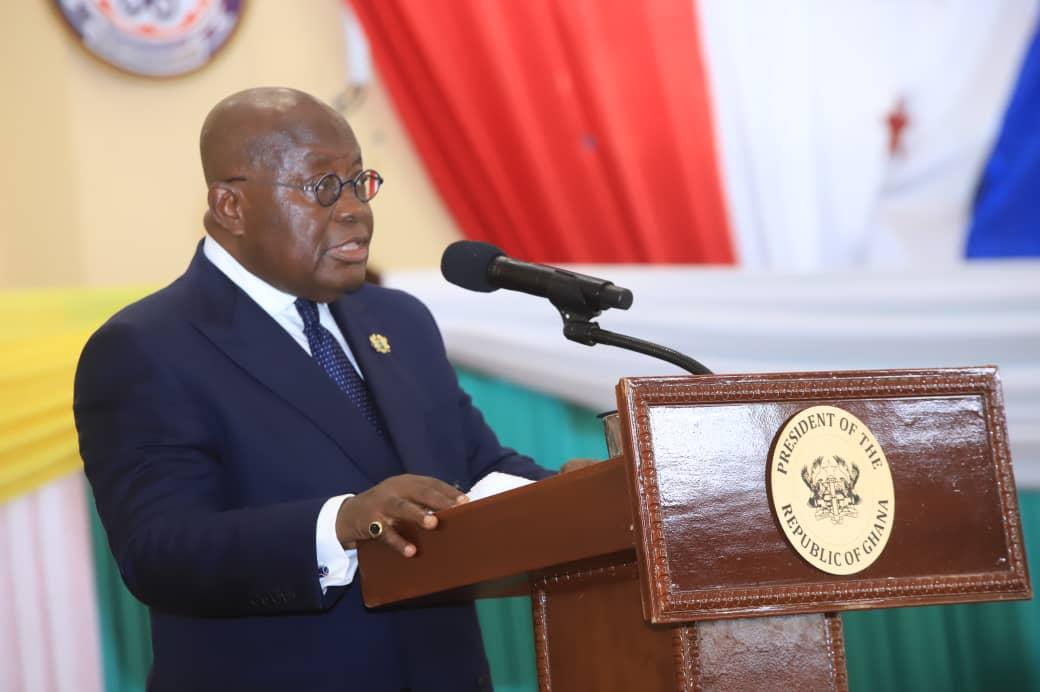
Ghana, Africa’s leading gold producer, is now overhauling its mining regime after nearly two decades. Proposed reforms would shorten license terms, tighten renewal conditions and route more revenue directly to local development while applying only to future contracts, which protects the sanctity of existing agreements.
Crucially, Ghana has gone a step further by scrapping the long standing value added tax on mineral exploration and reconnaissance. This tax was widely criticized for deterring greenfield exploration and pushing investors toward neighbours that did not tax such high risk activity. Its abolition sends a clear signal that Ghana wants to remain competitive and is willing to correct past policy mistakes. It is exactly the kind of course correction that blends national interest with investor realism.
Côte d’Ivoire, the quiet climber in West Africa
While Ghana remains a heavyweight, Côte d’Ivoire is quietly emerging as West Africa’s most exciting mining jurisdiction.
The country’s modern mining code offers competitive royalties, fiscal stability agreements and a manageable free carried interest for the state. Political stability has improved, exploration permits are being issued at pace and the government is actively positioning itself as a safe destination at a time when military takeovers and tougher codes in Mali, Burkina Faso and Niger are eroding investor confidence there.
Several industry analysis now describe Côte d’Ivoire as a golden frontier of West African mining, noting its favourable regulations and underexplored portion of the Birimian Greenstone Belt. If this trajectory continues, Côte d’Ivoire could realistically overtake Ghana as the most attractive overall mining environment in West Africa, especially for new gold and battery metal discoveries.
That possibility should be a healthy wake up call. Competition for capital between African neighbours is real. Countries that manage to combine local benefit with regulatory clarity will win the next wave of projects.
Local content as bridge, not barrier
Local content is now at the heart of mining regulation in Africa. Many codes specify minimum shares of local employment, procurement from local businesses and use of domestic banks, insurers and law firms. Some go further and require joint ventures with locally owned companies.
In principle, this is exactly the direction Africa should move in. Mining should not be an isolated enclave where value leaks out through imported services and expatriate labour. It should be an anchor for skills, supplier industries and downstream processing.
In practice, the outcome depends on design and implementation. Gradual and realistic targets, combined with programs to build the capacity of local businesses, can create a virtuous circle. Unrealistic quotas, opaque requirements to partner with specific intermediaries and conflicting rules from different agencies create frustration and can fuel corruption.
From my own experience looking at supplier data and cost structures, the most successful operations are those where the company, the state and local businesses sit together to plan how to deepen linkages over time. When local engineering firms, logistics providers, catering companies and financial institutions grow alongside the mine, the host community sees visible benefits and social tensions decline.
A call for balance
Africa’s mineral wealth offers a rare opening in a century defined by climate change and technological change. The continent will remain central to the supply of minerals that power electric vehicles, renewable energy and digital infrastructure.
Geology, however, is only the starting point. The real competition will be about rules.
If African countries can design mining codes that are firm on local content, strong on transparency and consistent over time, they can attract the responsible capital that is looking for long term partnerships. Ghana’s decision to eliminate its exploration tax is a positive example of the kind of pragmatic reform that strengthens competitiveness without abandoning national interests. Côte d’Ivoire’s steady rise as an investor favourite shows how a clear, stable code can transform an underexplored jurisdiction into a growth story.
If regulation becomes unpredictable, retroactive and tied to opaque deals, investment will drift to other regions and Africans will watch others shape the transition.
The choice is in our hands. We can use regulation as a bridge between communities and capital, or as a barrier that keeps opportunity out. The prize for getting this balance right is not only higher fiscal revenue, but a mining industry that genuinely supports wider development across the continent.
About the author
Richard Kojo Gabah is a US based financial modelling analyst who works on evaluating the investment attractiveness of large-scale mining companies in North and South America, Europe and Africa. The views expressed in this article are solely those of the author and do not represent the positions of any current or former employer.
Linkedin.com/in/richard-gabah
Email: [email protected]
The post Rules that attract capital: An investor view of African mining regulation and local content appeared first on The Business & Financial Times.
Read Full Story



Facebook
Twitter
Pinterest
Instagram
Google+
YouTube
LinkedIn
RSS