


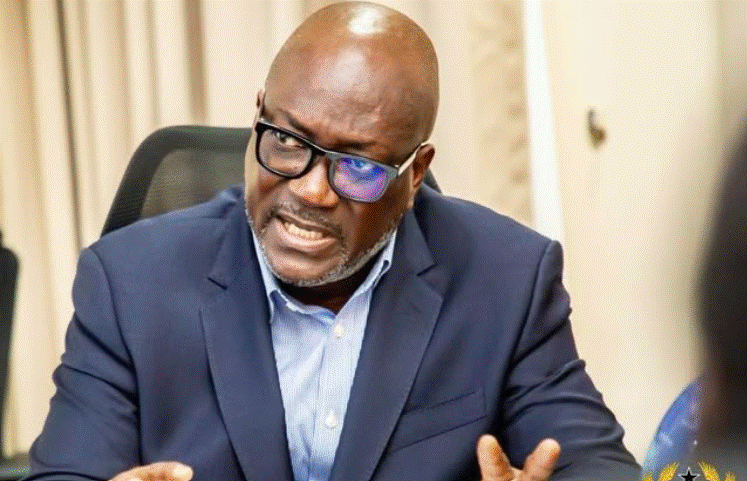
Former Minister for Trade and Industry, Kobina Tahir (KT) Hammond, has strongly rejected claims that an alleged GH¢89.4 million debt linked to the government’s One District One Factory (1D1F) programme was fictitious, describing the allegation as “preposterous” and a deliberate attempt to damage his reputation.
The controversy follows findings contained in a Bank Transfer Advice (BTA) review cited by the Ministry of Finance (Ghana) and the Auditor-General’s Department (Ghana), which suggested that a GH¢89.4 million liability submitted by the then Ministry of Trade and Industry in 2024 did not exist.
But Mr K.T. Hammond warned that if the report is not withdrawn, he would take legal action against those responsible.
“If the Minister of Finance and all those involved do not retract this statement, retrieve this document from Parliament and apologise, I will take all of them to court,” he warned.
According to the auditors, the Ministry had requested the transfer of GH¢89.4 million to five commercial banks as government’s contribution toward interest payments under the 1D1F initiative.
However, when the banks were contacted to confirm the liability, they reportedly denied being owed any such amount.
But reacting to the claim in an interview with The Chronicle in Accra, yesterday, Mr KT Hammond dismissed the allegation outright, insisting that there was nothing fictitious about the request made by the Ministry.
“I find it preposterous. If it was an attempt to politically damage me, you can’t just do that. I’ve had 24 years as a Member of Parliament and 10 years in the Executive. My name is unsullied. You just can’t tarnish my name like that,” he said.
1D1F Policy and Interest Subsidy Arrangement
The former Ministry of Trade and Industry explained that the GH¢89.4 million figure was tied to the financial structure of the 1D1F policy, which sought to encourage private investors to establish factories across Ghana’s districts.
Under the policy, private investors would secure loans from commercial banks while the government absorbed part of the interest burden to make financing more affordable.
“The whole idea was that individuals prepared to invest in the economy would go to various districts, depending on the potential of the district and set up factories.
“To encourage them, government decided that we were going to help alleviate the financial burden by absorbing half of the interest on the loans they contracted from the banks,” he said.
According to him, participating banks were encouraged to charge interest rates of around 20 percent on loans extended to companies under the programme.
“Out of the interest rate of about 20 percent, government would take 10 percent and the companies themselves would pay the remaining 10 percent,” he explained.
Mr KT Hammond said about 15 financial institutions participated in the programme, with the Ministry maintaining regular engagement with them to track government’s obligations under the scheme.“There were many occasions that I sat in my office and held meetings with at least 15 banks to determine the extent of our indebtedness to them,” he said.
Budget Estimates, Not Direct Payments
The former minister insisted that the GH¢89.4 million referenced in the audit findings was an estimate submitted as part of the normal government budgeting process rather than an actual payment made to banks.
According to him, ministries are required to submit projected financial obligations to the Ministry of Finance so that they can be incorporated into national budget estimates presented to Parliament.
“You don’t wait until the loan payment matures before asking for the money. You make estimates, which go to the Ministry of Finance and eventually to Parliament as part of the budget statement,” he explained.
He stressed that submitting such estimates does not automatically mean the funds are released. “You may ask for GH¢5 billion and be given GH¢1 billion and sometimes even that is not fully released,” he said.
Mr Hammond further stated that he does not recall any subsequent request being made for the actual disbursement of the funds.“It doesn’t even appear that the money was transferred to the Controller,” he noted, referring to the government’s payment processing system.
Questions Over Audit Findings
Mr Hammond also questioned the basis of the auditors’ conclusion that the debt was fictitious, saying the methodology used to verify the liability was unclear.
According to him, reports suggested that auditors consulted a limited number of banks to confirm the claim.
“You read the report and hear that they went to see some banks and the banks said they don’t know anything, And on the back of that you conclude the claim was fictitious? How stup… can it get?” he said.
He added that he was still waiting to receive full details of the audit findings, including the identities of the banks contacted and the role played by an external accounting firm reportedly involved in the review.
“I’m told an accounting firm possibly Ernst & Young was recruited by the Ministry of Finance or the Auditor-General. We need to ascertain the names of the banks and the basis on which they came to that conclusion.”
Mr Hammond maintained that ministers do not directly handle or sign government payments, stressing that financial disbursements follow established administrative procedures within the public service.
“No minister in Ghana signs cheques. It is the Chief Director and the finance officers who process payments through the Controller. Ministers deal with policy direction”.
He challenged investigators to identify any specific individual responsible for wrongdoing if evidence existed.
“If anyone stole money, arrest that person immediately, but don’t make blanket allegations against the Ministry,” he said.
Mr Hammond maintained that he remains ready to cooperate with any investigation into the matter.
The post KT To AG, Ato: Withdraw Your Report From Parliament Or Face Me In Court! appeared first on The Ghanaian Chronicle.
Read Full Story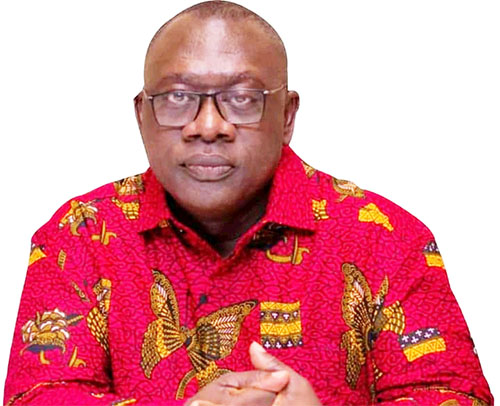






Facebook
Twitter
Pinterest
Instagram
Google+
YouTube
LinkedIn
RSS