


The Governor of the Bank of Ghana, Dr. Johnson P. Asiama, appeared before Parliament’s Public Accounts Committee with discussions centering squarely on Ghana’s gold-related programmes and the financial burden they have placed on the central bank.
At the heart of the hearing was the cost structure of gold trading initiatives, including the Gold for Oil programme and the broader gold aggregation and export framework. Committee members questioned how losses linked to these programmes were recorded and who should ultimately bear their cost.
Members drew attention to figures cited in public debate, particularly references to a GH?3.8 billion loss. Parliamentarians said that upon reviewing the Bank of Ghana’s 2024 financial statements, only a GH?1.8 billion loss related to the Gold for Oil programme was clearly disclosed.
They requested clarity on where the larger figure appeared in the accounts. The Governor assured the Committee that the Bank would return with detailed documentation to reconcile and explain the figures.
Dr. Asiama explained that gold trading, especially when designed to block smuggling and formalise exports, comes with inherent and unavoidable costs. He noted that these costs have been borne by the Bank of Ghana since the start of the programme, including throughout 2024 and into 2025, largely because trading had to continue even when budgeted government support had not yet been released.
He confirmed that the 2025 national budget made provision for USD 270 million, equivalent to about GH? 4.5 billion, to support gold-related activities. However, he told the Committee that cash releases were delayed until late in the year, forcing the central bank to step in temporarily to sustain operations.
According to the Governor, higher costs in 2025 were mainly driven by increased gold volumes passing through formal channels. He described this as a positive outcome, arguing that it reflected success in closing loopholes and reducing gold smuggling. He stressed that the additional volumes now being captured formally were previously being smuggled out of the country, with no benefit to Ghana’s reserves or foreign exchange position.
He was also keen to separate the discussion from claims linking increased gold volumes to galamsey. Dr. Asiama maintained that the rise in formal gold volumes did not correspond with increased illegal mining activity, adding that government enforcement against galamsey was ongoing. The focus, he said, should remain on the efficiency and transparency of the gold programme rather than assumptions about production sources.
On IMF concerns, the Governor clarified that the Fund had not objected to the Bank of Ghana’s involvement in gold programmes. Instead, the IMF’s position was that the central bank should not continue to absorb the full cost of what are essentially quasi fiscal activities. He said the Bank agreed with this position and was engaging the Ministry of Finance and other agencies to ensure proper burden sharing going forward.
Parliamentarians underscored IMF Extended Credit Facility commitments, which restrict central banks from indirectly financing government through loss making activities. They stressed the need for a clear framework to prevent gold programme losses from remaining on the Bank of Ghana’s books. Some members indicated that legislative action could be considered if needed.
Dr. Asiama appealed to Parliament to support reforms that would reassign gold programme costs to the appropriate fiscal authorities. He argued that this was necessary to sustain recent gains from gold formalisation, including reserve build up, exchange rate stability, and visible price declines in some goods. He added that the Bank of Ghana remained policy solvent at the end of 2024, with 2025 accounts still under preparation.
The Committee is expected to revisit the issue once the Bank submits further documentation on gold programme losses and proposed reforms to the cost sharing framework.
The post Public Accounts Committee probes gold programmes as BoG seeks cost reforms appeared first on The Business & Financial Times.
Read Full Story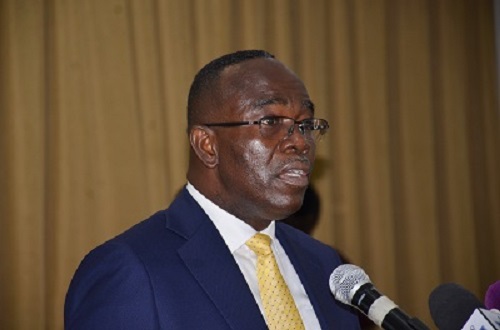




Facebook
Twitter
Pinterest
Instagram
Google+
YouTube
LinkedIn
RSS